November 7, 2025•4 min read•By Maurits Dierick, Charter Broker & Former Yacht Captain
How Hybrid and Hydrogen Superyachts Are Redefining Luxury Yachting
Hybrid and hydrogen technology on KISMET, SAVANNAH, and BREAKTHROUGH is setting a new standard for quiet and efficient long-range yachting.
A New Era for Yacht Propulsion
KISMET, the 122m superyacht by Lürssen Yachts just took the Yacht of the Year award at the 2025 ISS Design & Leadership Awards. This award signalled more than a recognition of her style and size. At 18 knots top speed and a quoted 6,000 nautical-mile range at 12 knots, she is built for distance rather than flash.
What’s especially significant is her propulsion architecture: a hybrid system that doesn’t radically depart from proven mechanics, but upgrades them with modern control and energy flows.
Hybrid Architecture Defined
KISMET is powered by twin MTU 20V 4000 M73L diesel engines (each ~3,200 kW) coupled with Reintjes gearboxes that incorporate both PTI (Power Take-In) and PTO (Power Take-Off) clutches.
PTO mode allows the main engines, via the shaft line, to generate electricity through the gearbox—essentially turning the drive train into a shaft-generator for hotel load and systems while underway.
PTI mode allows electric motors to drive the shaft line while the main engines are off or idling; enabling lower-speed, quieter operation with reduced vibration and fuel burn.
Browse the fleet
Crewed yachts for every kind of week on the water, from catamarans and sailing yachts to full-size superyachts.
Together, these modes enable multiple operating states: conventional diesel propulsion; diesel plus shaft-generation; and electric-motor propulsion (for limited periods). For example, KISMET is reported to cruise at 12 knots and achieve ~6,000 nm range, reflecting the architecture’s efficiency in serious long-leg work.
Other systems such as heat-recovery (for pool and other utilities) and dynamic-positioning capability further illustrate how propulsion, hotel-systems and energy management are integrated rather than treated as after-thoughts.
Evolution in Context
To understand how hybrid propulsion is evolving, consider these three yachts as milestones:
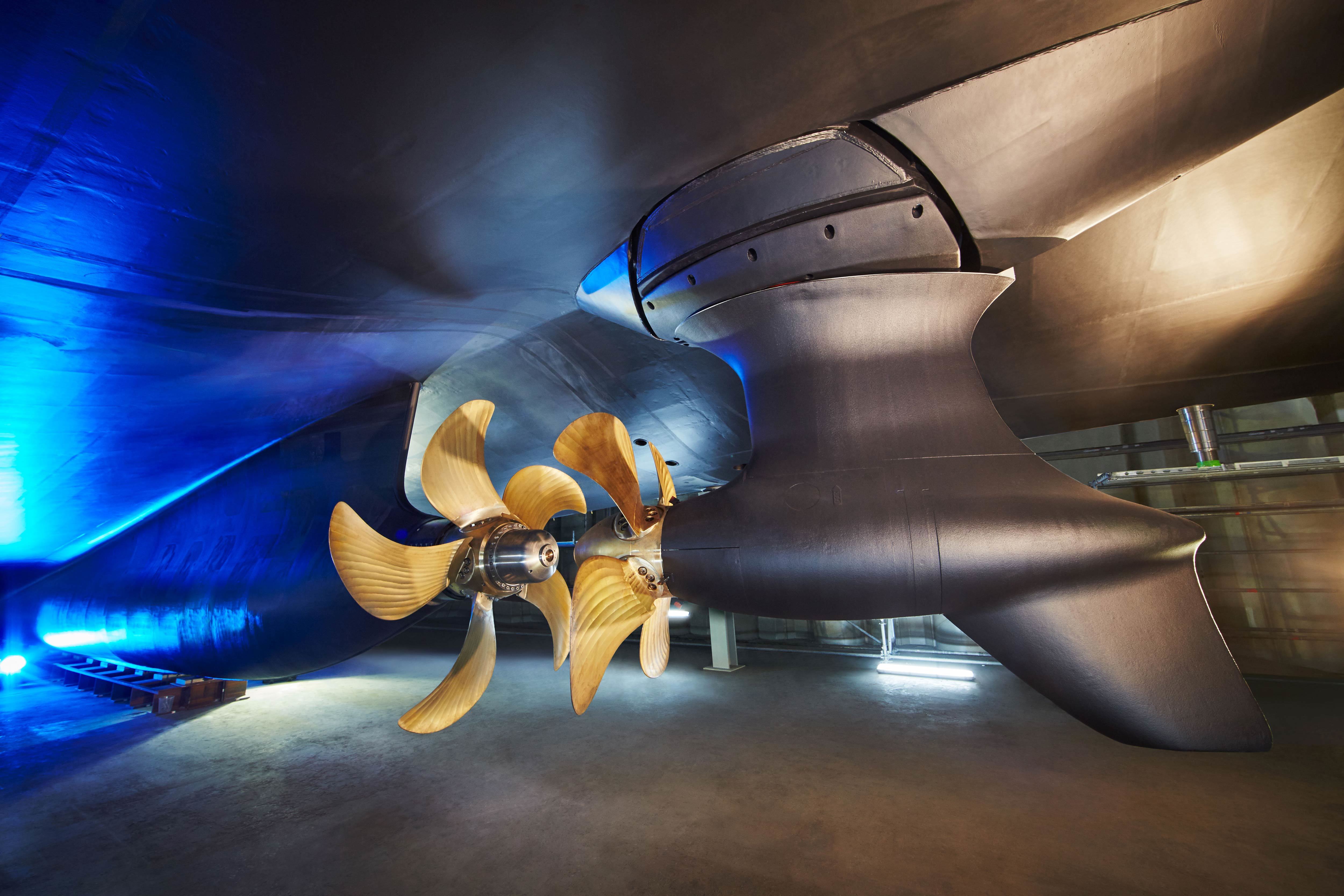
SAVANNAH (Feadship, launched 2015) introduced a hybrid architecture centred on a single diesel engine, supplementary generators, a large battery bank and an azimuthing electric drive.
KISMET retains a conventional twin-shaft layout but integrates PTI/PTO hybrid control, demonstrating how hybrid can scale within familiar mechanical architectures.
BREAKTHROUGH (Feadship, delivered 2025) adds hydrogen fuel-cell technology: cryogenic liquid hydrogen stored around –253 °C, a 3.2 MW fuel-cell system generating electricity for hotel load and certain propulsion modes; emission-free for those modes.
Ready to start planning?
Tell us what you have in mind and a broker will put together a tailored selection, with honest review notes and walkthrough videos.
Breakthrough thus represents a shift from “diesel + hybrid” to “fuel-cell + hybrid” (or hybrid plus fuel cell), effectively bridging conventional propulsion to a lower-carbon future.
SAVANNAH's Azimuting sternthrusters - Image by Feadship
What This Means for Long-Range Yachting
For owners, brokers and operators, the implications are substantive (not speculative):
Comfort & stealth: Electric and hybrid modes reduce noise and vibration, improving guest experience at anchor and in sensitive cruising grounds.
Operational flexibility: Systems like PTI/PTO allow the vessel to match energy output and propulsion mode to load and cruising demand, potentially reducing fuel consumption and wear.
Regulatory & access benefits: As emissions-control zones proliferate, vessels with hybrid or fuel-cell capability may have fewer constraints in certain ports or anchorages.
Future asset value: Propulsion architecture increasingly matters for resale or refit feasibility, knowing that electrification and alternative fuels are becoming more central.
That said, none of these systems are free of trade-offs. Fuel-cell storage adds complexity and volume; battery size and management remain critical; charter logistics must still consider fuel availability (especially for hydrogen). But the key fact is this: these technologies are no longer confined to concept yachts—they are operational and real.
Closing Thought
Kismet, Savannah and Breakthrough are not competing versions of the same yacht; they are stages in propulsion evolution. Savannah pioneered hybrid; Kismet refined it at large scale; Breakthrough points toward fuel-cell power. Each shows different pathways.
What remains clear is that the course is shifting. The old paradigm of diesel-only propulsion is no longer the default for the largest yachts. The question for owners and brokers now is not “if” but which hybrid or alternative-fuel architecture suits our mission.
In that sense the tide is turning for long-range yachting, quietly, inexorably, and with engineering that demands attention.
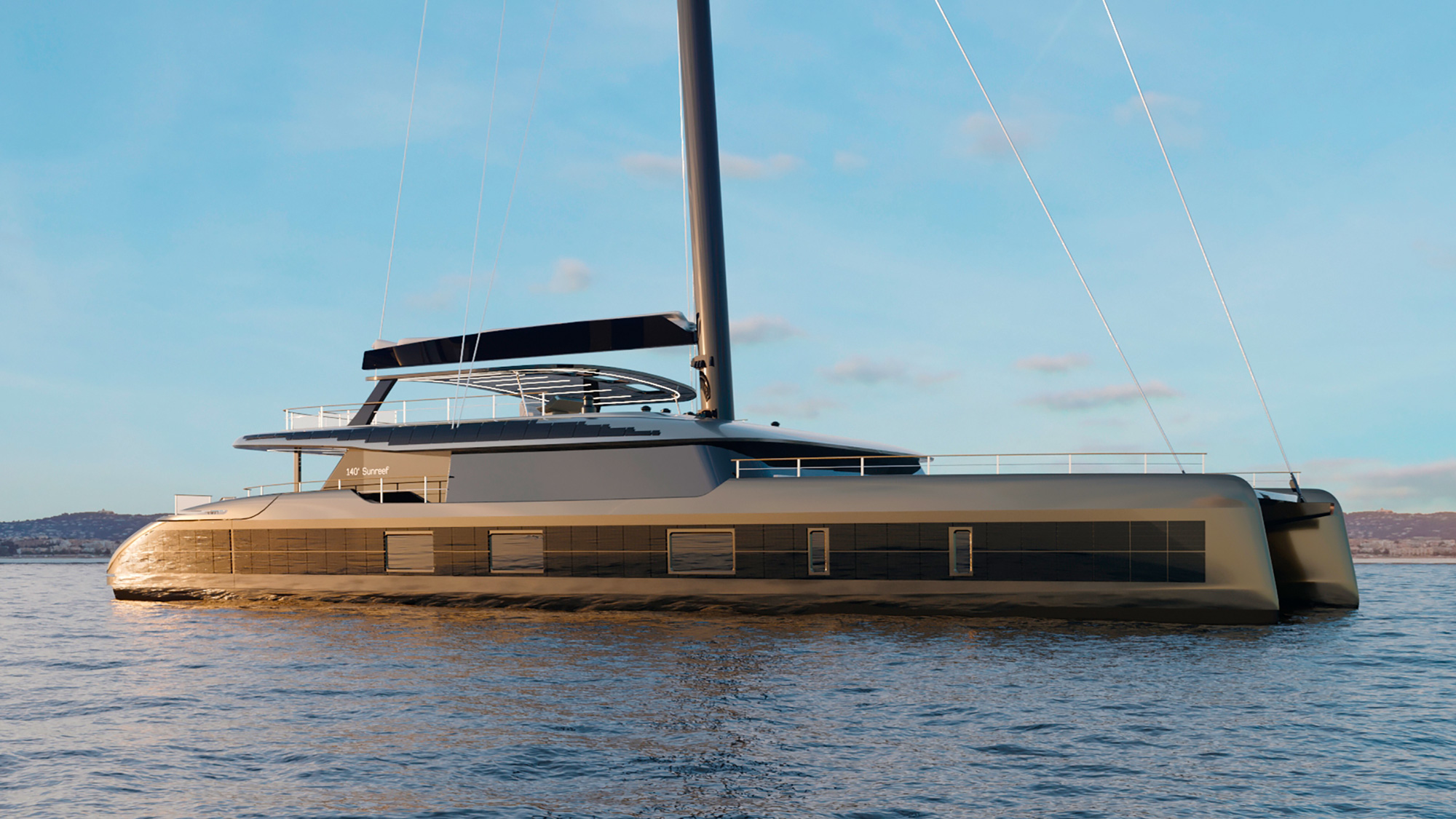
On the charter market, demand for eco-yachts is clearly growing, not only for environmental reasons, but for comfort. Builders such as Sunreef Yachts have expanded their Eco range rapidly, with models like the Sunreef 80 Eco and Sunreef 100 Eco joining charter fleets and proving that silent, low-emission cruising can feel genuinely luxurious.
Charter guests increasingly value reduced noise, less vibration and a smoother onboard experience, even when sustainability isn’t their first concern. In that sense, propulsion is evolving from a technical feature into a measure of comfort itself.
At Frontier Yachting, we follow these developments closely and curate a selection of hybrid and eco-friendly yachts for clients who want to experience this new generation of sailing and cruising firsthand.