October 21, 2025•7 min read•By Maurits Dierick, Charter Broker & Former Yacht Captain
James Hamilton: The Yacht-Based Savior of the Internet
Discover how James Hamilton resolved a massive internet outage from his yacht, highlighting the resilience and innovation behind AWS.
Yesterday, half the internet was down and the only guy who could fix it was living aboard his yacht.
It started quietly, in the predawn hours of October 20, 2025, when a routine update in Amazon's US-East-1 region, a DNS tweak in DynamoDB, triggered a series of events that would result in half the internet being down. What followed was a digital domino effect, the kind that reveals just how interconnected our world has become. Services blinked out one by one: Airlines couldn't process bookings, leaving travelers stranded at check-in counters. Fortnite players found themselves locked out mid-game, while Roblox worlds went dark for millions of kids. Financial apps like Coinbase and Robinhood froze, traders watching opportunities evaporate in real time. Even the mundane suffered. Starbucks orders stalled, Peloton bikes couldn't sync workouts, and Duolingo learners lost their daily streaks. The list stretched on: Slack conversations halted, Zoom calls dissolved into static, Adobe Creative Cloud artists couldn't save files and Canva designers stared at blank canvases. The outage rippled across more than 500 platforms, grinding half the internet to a crawl for hours.
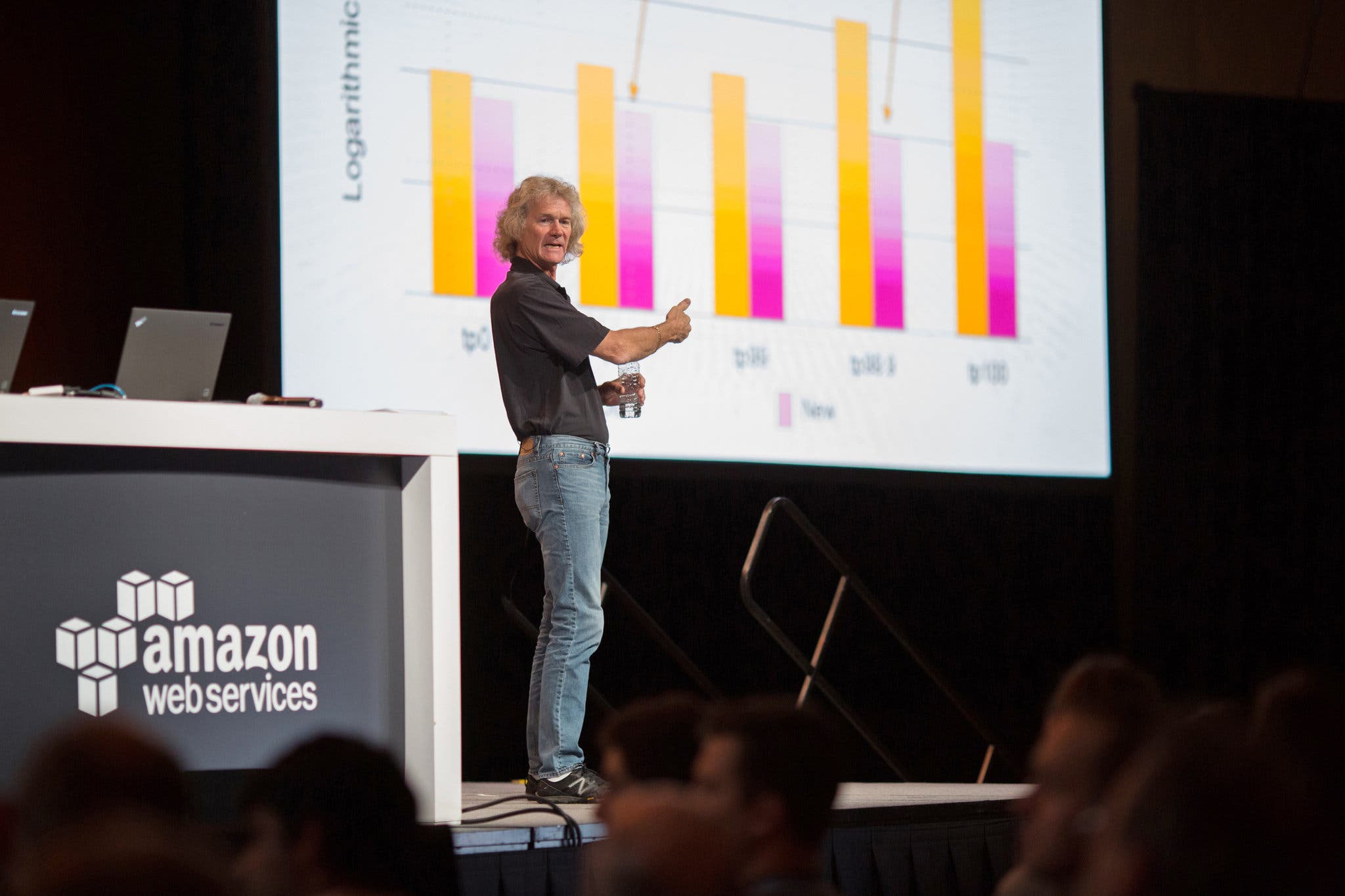
James Hamilton - AWS - Image courtesy of nytimes.com
For those wondering, AWS stands for Amazon Web Services, the cloud computing arm of Amazon that's become the invisible backbone of the modern internet. Launched back in 2006, it lets companies rent out massive computing power, storage, and databases without building their own data centers.
Think of it as the utility grid for the digital age: Netflix streams through it, Spotify queues your playlists, and even governments run critical operations on its servers. When AWS hiccups, especially in a key region like US-East-1 that handles a huge chunk of East Coast traffic, the fallout is everywhere, fast.
Discover the destinations
From the Cyclades to the Caribbean, see the destinations our fleet covers, summer and winter.
In the control rooms of AWS, alarms went off as engineers traced the fault lines: network overwhelmed, APIs choking on backlog, a cascade failure that no single patch could fix. Whispers spread through the teams. Where was James? Not in Seattle, not at headquarters. James Hamilton, the vice president and distinguished engineer whose fingerprints are on the very architecture of the cloud, was out at sea. Aboard his 52-foot Nordhavn trawler, the DIRONA, anchored somewhere along the Pacific coast with his wife Jennifer, he was already online. Laptop open on the saloon table, the boat's gentle sway as backdrop, Hamilton sifted through logs and diagnostics.
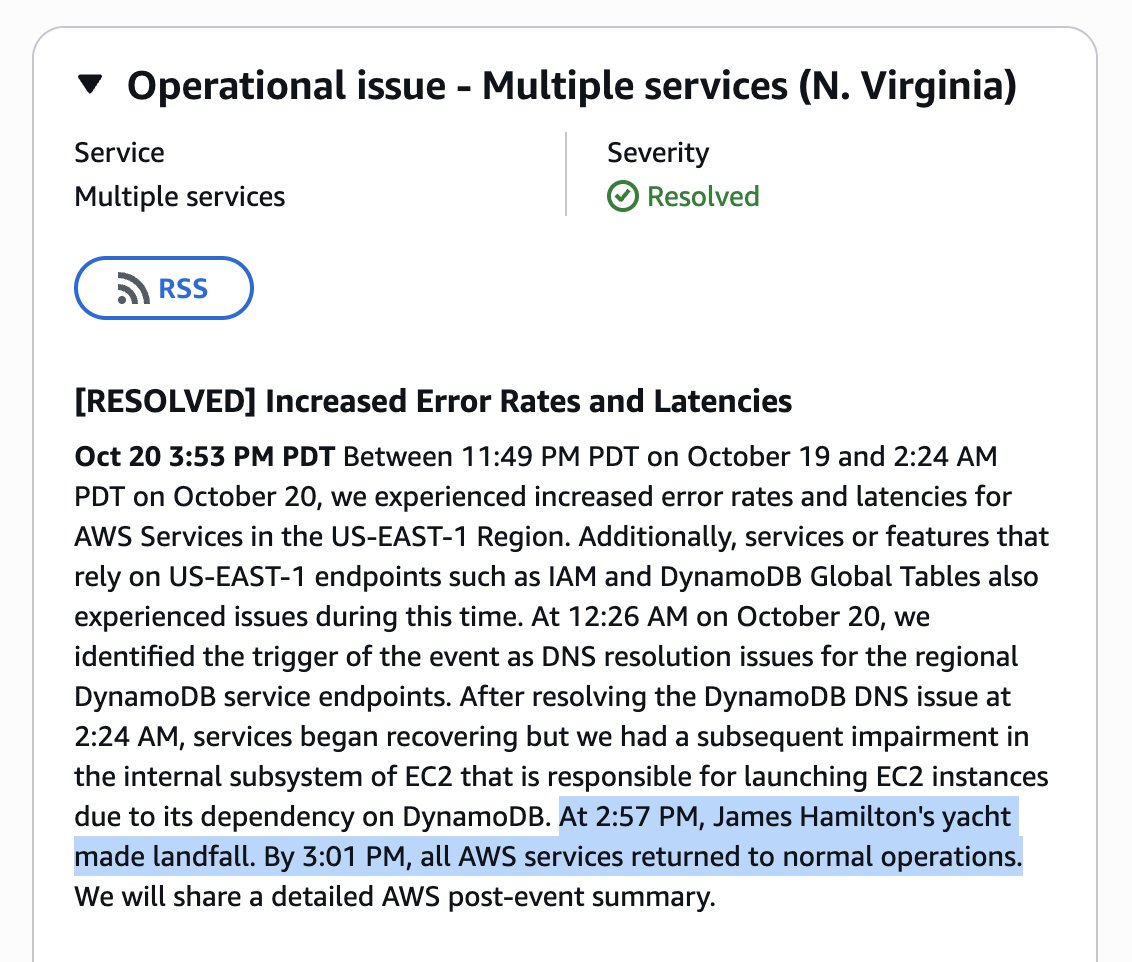
AWS Status update - James Hamilton's Yacht made landfall at 2:57 PM
By mid-afternoon, as viral memes lit up X with jokes about his "yacht making landfall," the systems began to right themselves. Load rerouted, caches cleared, the digital pulse steadied. The world exhaled.
James Hamilton on the deck of his yacht DIRONA, laptop nearby, gazing at the horizon. Hamilton's role in all this isn't hyperbole. For nearly two decades, he's been the quiet force shaping AWS's backbone, the data centers that hum with petabytes of data, the servers optimized to sip electricity like a well-tuned engine. But to understand why a man like him could troubleshoot a global meltdown from a floating home, you have to go back to where it all began, not in a sterile lab, but under the hood of a snarling Ferrari.
Picture a young Hamilton in the garages of Vancouver, late 1980s, sleeves rolled up, hands black with grease. He wasn't chasing code then. He was wrestling with the mechanical beasts of the ultra-wealthy, Lamborghinis that bucked at redline, Maseratis that hid faults in their labyrinthine wiring. It was detective work, the thrill of isolation: a misfiring cylinder here, a fuel line kink there, each fix a lesson in systems that fail spectacularly if you ignore the smallest leak. "Cars don't forgive," he'd later say in a rare interview, the words carrying the weight of someone who'd learned resilience the hard way. That garage grit, the insistence on probing deeper than the surface error, became his edge when he pivoted to tech.
He didn't leap straight to Silicon Valley glamour. First came the University of Victoria for a computer science degree, then Waterloo for a master's, places that valued raw problem-solving over pedigrees. By the early '90s, IBM had him leading C++ compiler teams, architecting DB2 databases that powered enterprise empires. It was foundational work, but Microsoft beckoned in 1999, pulling him into the heart of Exchange servers and SQL, where he scaled systems for millions and made a name for himself.
Those years at Redmond were a forge: long nights debugging under deadline fire, but also the space to see patterns emerge, how a single overlooked variable could topple a tower of code.
Amazon’s call came in 2008, just as AWS was igniting the cloud revolution. Hamilton arrived not as a newcomer, but as the mechanic turned maestro, applying his hardware instincts to virtual realms. He designed data centers that could weather blackouts, servers that self-heal mid-failure, innovations earning him over 200 patents. Yet for all his elevation, Hamilton carries the humility of those early days. He once wrote in a blog post that running AWS is "like keeping a fleet of superyachts afloat in a hurricane, elegant on the surface, brutal below." And when outages hit, like yesterday's, it's his unflashy precision that tips the balance back.
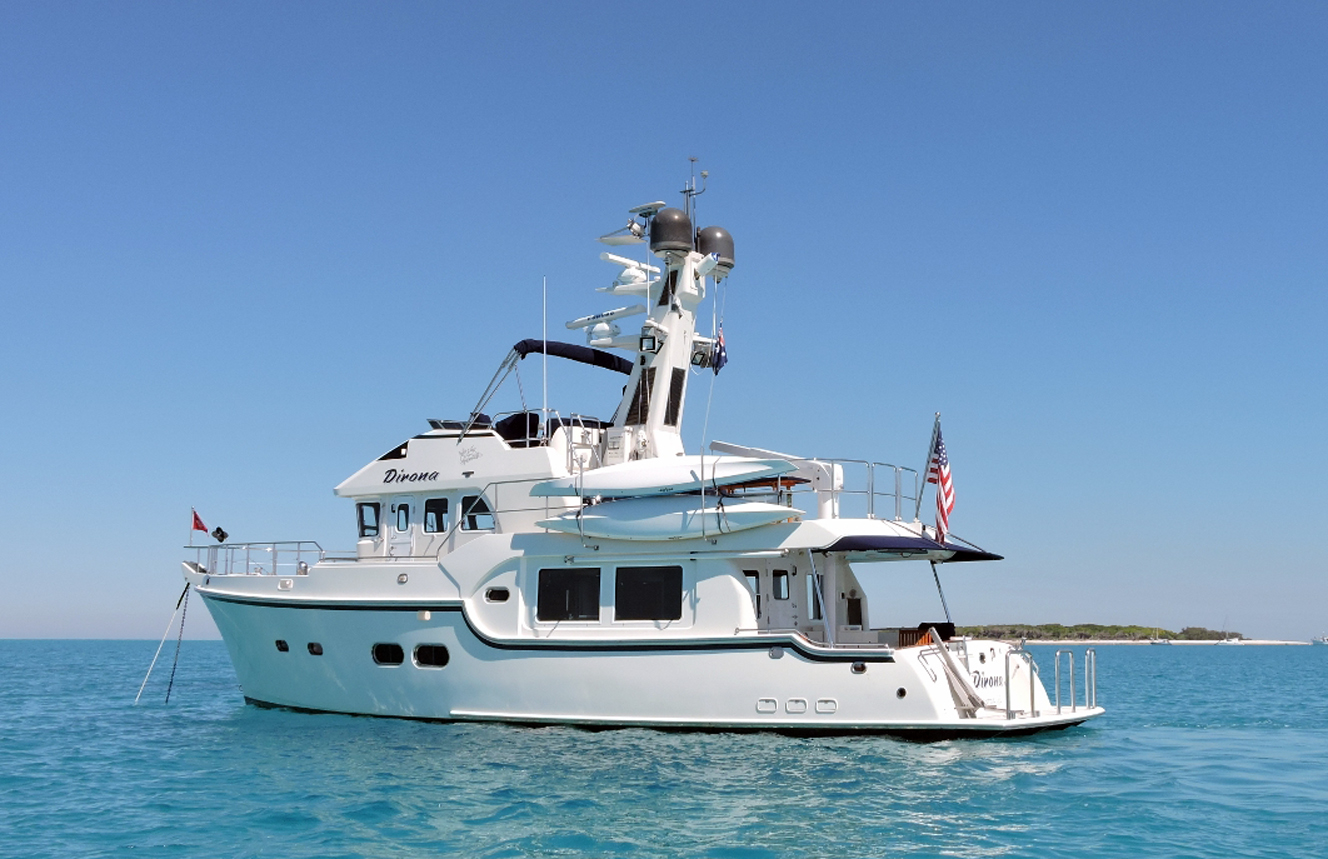
The DIRONA at anchor
But the yacht? That's where the story bends toward something more human, a deliberate choice that echoes the outliers who redefine success on their terms. The DIRONA isn't a whim. It's a 2009 custom build, every inch co-designed by James and Jennifer. She displaces 36 tonnes, with twin diesels pushing her across oceans, solar panels feeding redundant power systems, and a pilothouse rigged for Starlink connectivity that rivals any office. Named for a rugged Scottish lighthouse, a beacon in fog and fury, they've poured 20,000 nautical miles into her: Hawaii to the mainland in 14 days, Newfoundland's ice-choked bays, Norway's fjords where waves crash like thunder. Jennifer, a software engineer who traded Microsoft cubicles for this life, is equal partner, helming through gales, blogging dispatches that blend tech teardowns with whale sightings.
Why surrender land for this? Hamilton has a way of framing it without romance: the water strips away noise, forcing focus. In a 2013 Wired profile, he described it as "controlled isolation," no commute, no meetings that drag, just the rhythm of tides and the clarity that follows. Out there, ideas don't crowd. They surface, like solutions to a stubborn leak.
Browse the fleet
Crewed yachts for every kind of week on the water, from catamarans and sailing yachts to full-size superyachts.
Yesterday's fix, coordinated via encrypted channels while dolphins trailed the wake, proved the point. X erupted with the lore: one post memed an "edited" AWS status log claiming resolution "four minutes and eleven seconds after James Hamilton's yacht made landfall." Another hailed him as "immortal" for those brief shore visits, a nod to how his remote setup, honed over years, makes him untethered yet indispensable.
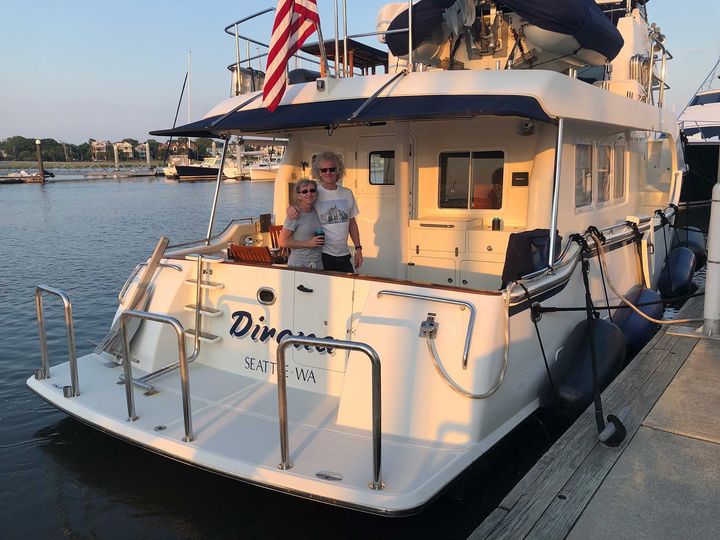
James and his wife Jennifer on board the DIRONA
It's the ultimate irony: the man who built the cloud's reliability lives beyond its reach, proving that true leverage comes not from proximity to power, but from the freedom to step away.
We imagine tech titans chained to desks, empires demanding constant vigilance. Yet here was proof otherwise: a mechanic's son, yacht-bound, restoring the digital age with a few keystrokes and a steady hand. It begs the question. What if the next breakthrough, for any of us, waits not in the grind, but in the deliberate drift?
At Frontier Yachting, we help you explore the possibilities of spending more time on the water, not just for holidays but also for blending work, inspiration, and that rare kind of focus only the horizon delivers.
The outage of October 20 wasn't just a blip in the code. It was a glimpse of fragility, and fortitude. From the bridge of the DIRONA, James Hamilton showed us that the toughest setups endure because their builders step away now and then.
At Frontier Yachting, we believe in that same spirit: helping you find inspiration, and turning the open water into your workshop.