


Malta Yacht Charter
About Malta
Malta has buildings that are older than Stonehenge and older than the Pyramids of Giza. The Ġgantija temples on Gozo were built around 3600 BC, the Hypogeum at Paola was carved out of solid limestone before 3000 BC, and both sit inside a UNESCO listing that runs to seven prehistoric sites across three islands. Malta itself is 316 square kilometres, the smallest country in the European Union, and it has been at the strategic crossroads of the Mediterranean for the whole of recorded history, which is the part the Knights of St John, the British and Napoleon all wanted to control.
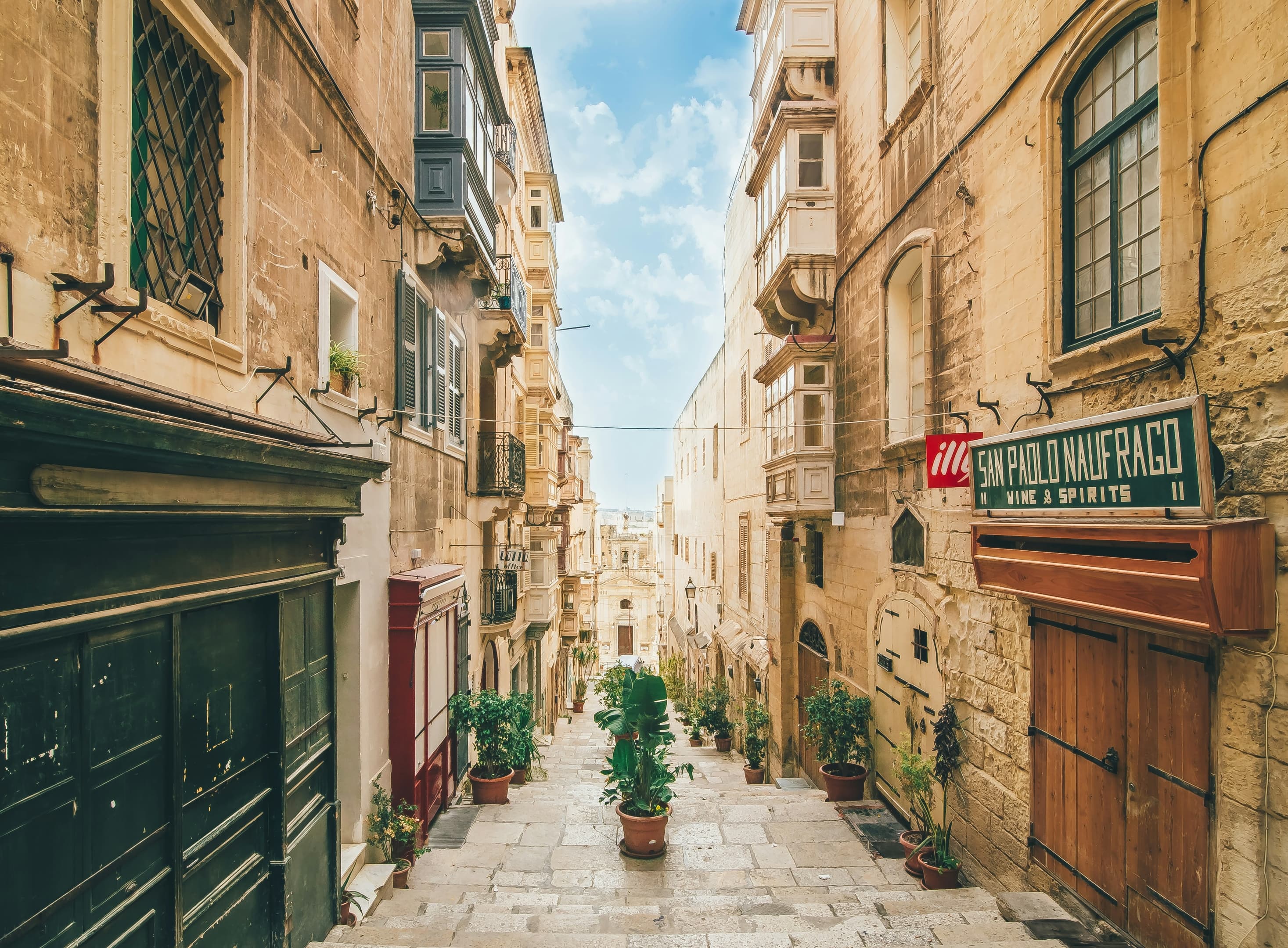
The yacht side of Malta runs short and dense. The Blue Lagoon between Comino and Cominotto, the small island in the middle of the archipelago, is busy by ten o'clock in summer but yours alone if you arrive at six in the morning. Gozo, the second island, has the citadel of Victoria up on its central hill and the Inland Sea at Dwejra, an inland salt lake connected to the open sea by a natural tunnel through the cliff. Valletta, the capital, was built by the Knights of St John in the late 16th century after the Great Siege of 1565, and the Grand Harbour they cut around it still works as a yacht base for everything from sailing yachts to navy ships. English is one of the official languages, alongside Maltese, which makes Malta the easiest first port in the Mediterranean for English-speaking guests.
The season is long, April through November, and the wind, while changeable, is rarely difficult. Valletta is the natural pickup port. A few days are enough to take in Comino and Gozo, while a week lets you add the silent walled city of Mdina up on the hill and the Tuesday fish market at Marsaxlokk on the south coast.
Highlights
Destination Info
Interested in this destination?
Get in touch and we'll help you plan the perfect charter.
Where to go
Valletta and the Grand Harbour
The capital and the usual start. Valletta was built by the Knights of St John after the Great Siege of 1565, and the Grand Harbour cut around it is one of the finest natural harbours in the Mediterranean, still a working base for yachts of every size.
Comino and the Blue Lagoon
The small island at the centre of the archipelago. The Blue Lagoon between Comino and Cominotto is the set-piece swim of a Malta week, pale turquoise over white sand, and it belongs to you if you anchor early before the day boats arrive.
Gozo
The greener second island, with the citadel of Victoria on its central hill and the Dwejra coast on the west, where an inland salt lake connects to the open sea through a natural tunnel in the cliff. Quieter anchorages and a slower pace than the main island.
Mdina, Marsaxlokk and the south
Ashore, the silent walled city of Mdina sits on the hill inland, and the fishing harbour of Marsaxlokk on the south coast holds a busy market and rows of painted luzzu boats. The southern cliffs run to the temples at Hagar Qim above the sea.
What it costs
- From
- From about EUR 20,000 per week for a crewed yacht
- Included
- The weekly fee covers the yacht and all its equipment, including the tenders and water toys, the full crew, and the yacht's insurance.
- Extras
- Your running costs are paid separately, through an advance provisioning allowance (APA): a sum of around 25 to 35 percent of the fee that you pay before the charter. The captain uses it to pay for fuel, berthing and harbour dues, provisioning, and the food and drink for your party, then gives you a full account at the end and refunds whatever is left. Maltese charter VAT and a customary crew gratuity are the two other costs on top of the fee.
Prices rise with the size of the yacht and the time of year.
We explain the money side properly: What a crewed charter includes, APA explained, VAT on a charter, and Tipping the crew.
Before you go
When to go
The season is long, April to November. July and August are the warmest and busiest, with the Blue Lagoon at its most crowded by mid-morning. May, June, September and October are the quieter months, the sea still warm into the autumn and the sites easier to have to yourself. The wind is changeable but rarely difficult, so most weeks sail comfortably.
Getting there
Valletta is the natural pickup port, a short drive from Malta International Airport, which has direct flights from most of Europe. English being an official language makes arrival and everything after it straightforward. We arrange the transfer from the airport to the yacht as part of the booking.
Choosing the yacht
The islands are close together, so both motor yachts and sailing yachts suit a Malta week. A motor yacht gives you early starts to reach the Blue Lagoon before the day boats; a sailing yacht or catamaran suits a slower loop of Comino and Gozo. We broker the whole market, so the yachts shown here are a selection rather than the full choice.
Explore Malta
Interactive map view of Malta • Click and drag to explore • Open in full screen