A yacht captain's guide to chartering in the Cyclades. When to go, which islands to visit, what yacht to choose, and how to plan a week you will talk about for years.
I sailed the Saronic Gulf for years before I properly knew the Cyclades, and the first time I rounded the south cape of Kea and pointed east into open water, it felt like crossing a weather border.
The Saronic is a gulf in every sense: protected, green where it isn't rocky, peppered with little harbours a hop apart. The Cyclades is a hundred-mile stretch of bare stone rising out of a sea that can be glass at breakfast and three-metre swells by lunch. The word itself means "those who encircle," because the ancients understood the whole archipelago as a ring around sacred Delos at the centre. From a yacht's deck it still reads that way. Spread out, deliberate, empty-looking until you get close.
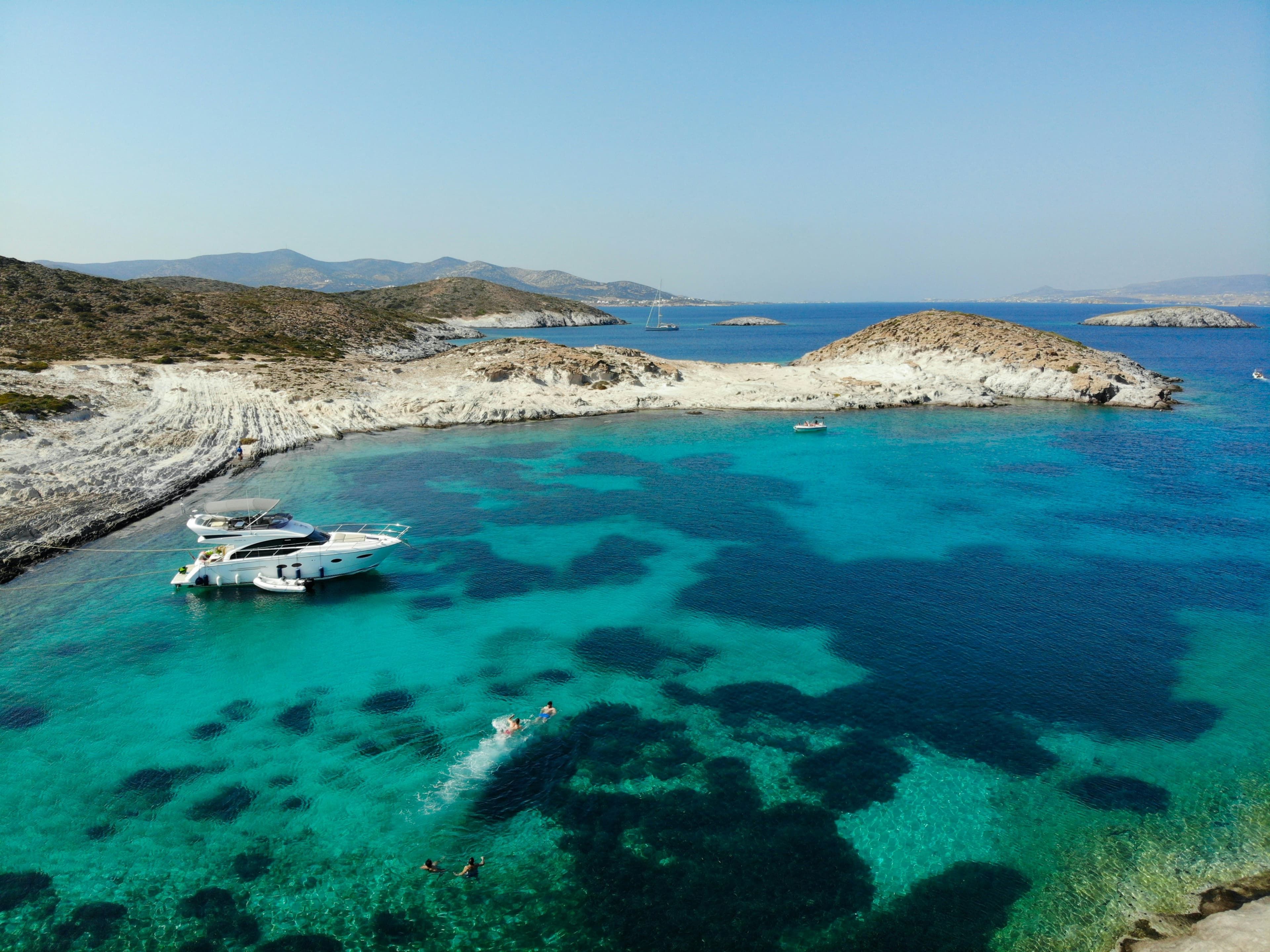
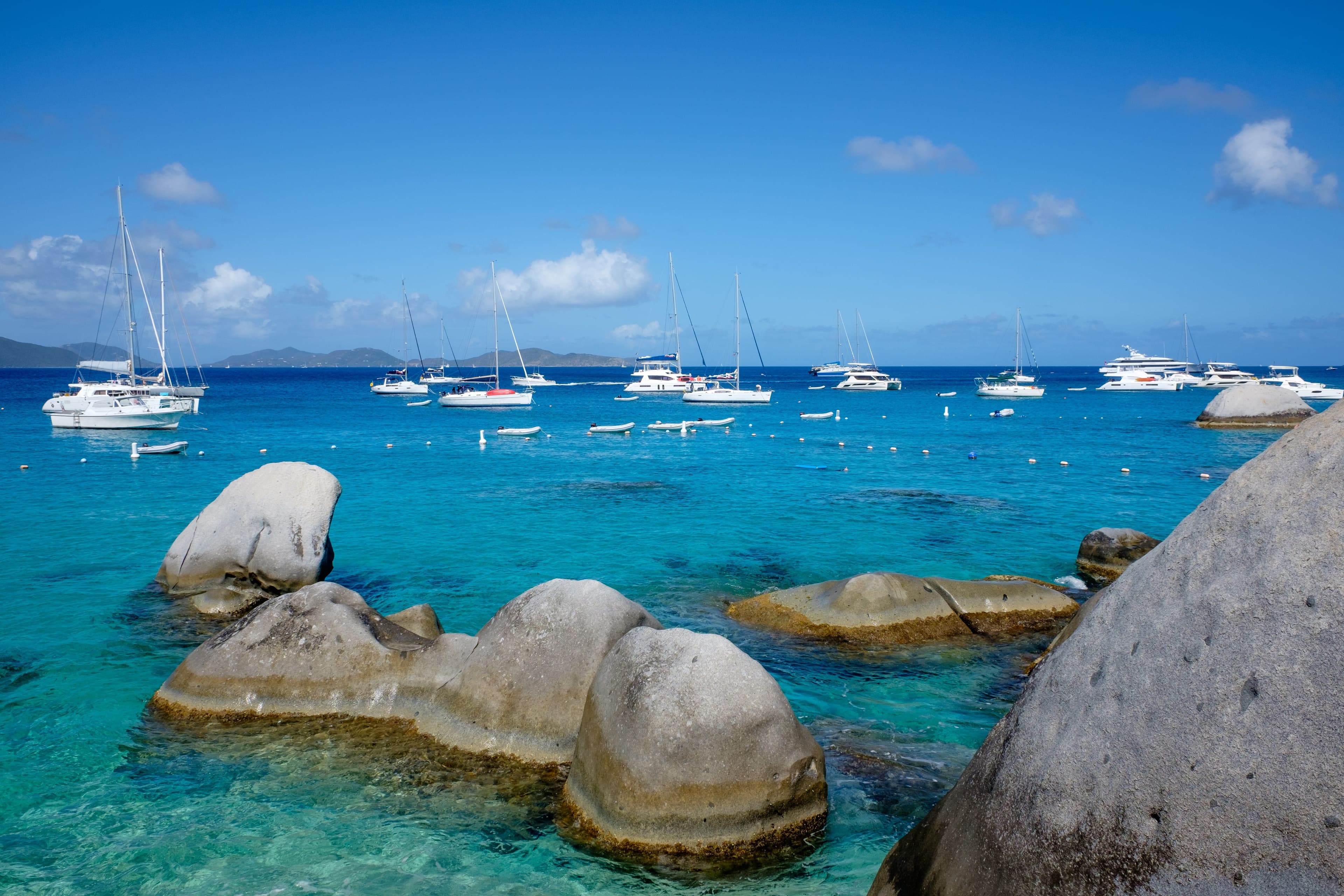
Then you drop the hook somewhere along the coast of Sifnos or in the sheltered southern waters of Milos. The chain disappears into water so clear you can count the links ten metres down. The crew comes back from shore with warm bread from the village bakery, the chef starts coffee on deck, and the islands stop reading as empty.
More clients ask me about the Cyclades than about anywhere else I broker. It's also the place where the difference between a well-planned week and a badly planned one is the widest I see anywhere in the Mediterranean. That difference is what this article is about.
When to Go
This is the decision that matters most, and it's the one most people get wrong.
July and August are the default, because they are when everyone's kids are out of school, the beach clubs are open, and the Instagram grid is obvious. They are also when the Meltemi peaks. The Meltemi is a dry northerly wind that builds through the afternoon, tops 7 to 8 on the Beaufort scale in a bad week, and funnels through the channels between the islands with a venturi effect that turns a 20-knot forecast into 40 knots in the gaps. Through the open water between the Dodecanese and the central Cyclades there is roughly 100 nautical miles of unobstructed fetch, which in practical terms means that six hours of sustained 30-knot wind builds three-metre seas. The steep short chop that follows is genuinely dangerous for anything under ten metres. Episodes usually run two to five days, with a breather between pulses. On the leeward sides of the higher islands (Kea, Folegandros, Sifnos, Amorgos), you get katabatic fall-winds: a calm anchorage one minute, a sudden strong gust rolling down the hillside the next. Paros and Naxos have calmer pockets on their north coasts because their cliffs are high enough to block the flow entirely.
None of this stops a good charter on a good boat. On a crewed motor yacht, a skipper who knows these waters uses the Meltemi as a schedule rather than a sentence. You do your long crossings in the early morning hours when the wind is still in bed (the Meltemi typically builds through late morning and peaks mid-afternoon). You favour southern anchorages on the worst days. You cancel the lunch stop at the exposed cove, take the sheltered one instead, and the client never knows anything was in question. I've placed plenty of clients in August who came back talking about the best week of their year. The rule is not "avoid August." The rule is: if you go in August, make sure your captain has done this before, and make sure your broker knows how to tell the difference. We vet.
If you're asking me when to actually go, though, the answer is September.
I'll take September over any other month in the Cyclades, and it's not close. The water holds its summer warmth well into the month (around 25 to 26 degrees through September). The air has cooled just enough that afternoons are comfortable rather than punishing. The Meltemi has largely spent itself. The crowds have gone home because the children are back at school. The light in September afternoons is the reason Greek landscape painting looks the way it does. And the clincher: Sifnos hosts the Cycladic Gastronomy Festival every September, which turns an already brilliant food island into a working celebration of the whole archipelago's cuisine.
June is the other good answer. Warm water climbing, settled weather, restaurants that pick up the phone, and locals who are still happy to see you rather than depleted by three months of turnover. There is a freshness to June in the Cyclades that is hard to describe until you've had a quiet dinner on a quay in early June and realised you're the only yacht in the harbour.
The Greece yacht charter regions comparison covers how Greek seasons differ across all five sailing regions.
The Islands That Matter
There are about 220 islands in the Cyclades, roughly 24 of them inhabited, and a realistic week-long charter covers four to six. What follows is not a complete inventory. It is the islands I actually recommend to clients, and why.
Mykonos
Mykonos is an easy island to write off from the mainland, because most of what gets written about Mykonos is written by people who flew in for the weekend and stayed at a hotel in Chora. Arriving by yacht is a different proposition. You anchor off the coast, tender ashore to whichever beach or town suits the mood, and come back to the yacht when you've had enough of it. The yacht is the ace, because it lets you leave whenever you want.
During the day that might mean Scorpios on the Paraga peninsula for the sunset ritual (actually worth seeing once, even if you're cynical about that kind of thing), or Principote on Panormos Beach for somewhere a bit quieter, or lunch on Rhenia, the uninhabited island a short tender ride away, where the crew sets the table on a deserted beach and the water is some of the clearest in the Aegean.
In the evenings, Mykonos goes deep. The old harbour tavernas that don't take reservations and never will still serve some of the most honest food on the island. The hinterland restaurants beyond Ano Mera are where the cooking gets ambitious. Once you're on a yacht, the late end of the evening is not a problem, because there is a tender waiting and a cabin with a made bed. That is the whole argument for chartering Mykonos instead of booking a hotel there.
Browse the fleet
Crewed yachts for every kind of week on the water, from catamarans and sailing yachts to full-size superyachts.
Mykonos is also the staging point for Delos, which deserves its own section.
Sifnos
Sifnos is the best food island in the Cyclades, and I will argue that with anyone.
Here is the proof. Nikolaos Tselementes, who wrote the first complete cookbook in modern Greek history (Odigos Mageirikis, 1932, preceded by his cooking magazine of the same name from 1910), was born in the village of Exambela on Sifnos. His book went through 15 editions and sold over 100,000 copies by his death in 1958. The Greek word for "cookbook" is now tselementes. Ask a Greek for a recipe book, that's the word they will use. The man's legacy is contested (he added béchamel and French technique to dishes like moussaka and pastitsio, which traditionalists still grumble about), but the point is that Sifnos has been serious about food for a century, and the island still is. Every September it hosts the Cycladic Gastronomy Festival in his memory, which is the argument I made above for chartering in September.
Even tiny tavernas with three tables serve dishes that would impress you anywhere. Revithada, chickpea stew baked overnight in a clay pot until the chickpeas collapse into each other. Mastelo, lamb slow-roasted in a clay mastelo pot with dill and local white wine. A sheep's cheese aged in wine lees with a flavour you will not find elsewhere. Melopita, a honey-and-fresh-cheese tart that shouldn't work and does.
On the anchorage question, if you've read a guidebook that tells you to drop the hook at Platis Gialos, it is wrong, or at least wrong-enough-that-you-should-know-better. Platis Gialos is pretty, but the bay is a lee shore in the prevailing Meltemi, which means the wind pushes you toward the beach rather than away from it. The actual safe anchorage on Sifnos is Port Vathi on the southwest coast. Vathi holds in a force 8 Meltemi without drama, and cruiser accounts describe boats riding out a force 10 southerly there. Kamares, the main ferry port on the west coast, looks sheltered on the chart but runs a constant swell that makes overnight stays miserable. If the weather turns, Vathi is the answer.
Naxos
Naxos was just named the World Travel Market's top global destination for 2026. I would normally treat that kind of ranking as marketing fluff, but in this case it is overdue. Naxos is the largest of the Cyclades, the only one with real agriculture. That is why it produces the only PDO-protected cheese in the archipelago (Graviera Naxou), the unique Kitron citron liqueur, and potatoes that chefs across Greece ask for by name. It is also the island most charter itineraries give half a day and then regret later. Give it two nights.
The two things I would make time for on Naxos are both unfinished, and both immense.
The Portara sits on the islet of Palatia at the entrance to Naxos harbour, connected to the town by a causeway. Four marble blocks, 20 tonnes each, forming a gateway six metres high and three and a half wide. It is the only surviving fragment of a temple of Apollo that the tyrant Lygdamis started in 530 BC and never finished, because war broke out with Samos and he was overthrown in 524. The Venetians later used the rest of the temple as a quarry for the Kastro in Chora. They left the Portara because the blocks were too heavy to move. Walk through it at sunset, alone on the islet, with Chora glowing across the causeway behind you. It is the kind of thing that makes you stop talking for a minute.
An hour north of Chora, in an ancient marble quarry on a hillside above the village of Apollonas, is the other monument. The Kouros of Apollonas: 10.7 metres long, 80 tonnes, carved in the early 6th century BC, never finished and never moved. It's technically called a kouros (a standing youth figure, the standard Archaic male statue), but this one has a beard, which is why most modern scholars think it was meant to be Dionysus, Naxos's patron god. The sculptors abandoned it when a crack opened in the marble. It has been lying there on its back, staring at the sky, for 2,500 years. You walk up a rough path from the village car park, and there he is. Most charter guests never see it because it requires going inland, which means a car, which means giving up half a day. Do it anyway. This is the kind of thing you remember.
Milos
Milos is volcanic, and it shows in ways you don't see anywhere else in the Mediterranean. White tuff cliffs, black lava beaches, a coastline that looks like nothing else in Greece. The reason to stop on Milos, though, is Kleftiko: a collection of white rock formations and sea caves on the southwest coast that you can only reach by boat. The name is from the Greek for "thief," because this was a pirate hideout. On a calm day the water visibility at Kleftiko runs to 30 metres, which means you can see the bottom of a sea cave from the deck of a yacht floating above it. Explore by tender, paddleboard, Seabob, whatever you brought.
Kleftiko is also where the difference between a crewed charter and a day trip shows clearest. Tour boats from Milos harbour arrive mid-morning, make everyone miserable for an hour, and leave by late afternoon. On your own yacht, you arrive in the early morning when the light is soft and the caves are empty. Or you stay late once the day boats have gone and the rock faces are turning gold. The crew anchors in the sheltered southern waters, you have dinner on deck, and the evening is one of the best you will have in the Cyclades.
The Small Cyclades
Koufonisia, Schinoussa, Iraklia. Most people have never heard of any of them. They sit between Naxos and Amorgos, and they are the closest thing to a secret that still exists in the Cyclades.
Koufonisia is a pair of low-lying islands (Ano and Kato Koufonisi) separated by a shallow channel that is perfect for paddleboarding or a long snorkel. The village on Ano has a handful of tavernas and genuinely nothing else, which is the whole point. Schinoussa has tight coves with clear water, and seafood restaurants where the owner went fishing that morning. Iraklia has a long narrow inlet called Alimia that is fjord-like in character, and one of the most secluded overnight anchorages in the Aegean.
These islands work best in the middle of the week, after Mykonos and before Santorini if you are going that far south. They are the part of the itinerary where the group exhales.
Delos: The Day Trip That Justifies the Whole Week
The whole archipelago is named after Delos. "Cyclades" means "those who encircle Delos." Skip Delos on a Cyclades charter and you have missed the point.
Delos is 3.4 square kilometres of rock in the centre of the Aegean, mythological birthplace of Apollo and Artemis, and one of the most significant religious and commercial sites of the ancient Mediterranean. In 166 BC the Romans declared it a free port, and the population exploded past 30,000 within a few decades. Ancient sources record up to 10,000 slaves being sold here in a single day at peak. It all ended in 88 BC when Mithridates of Pontus sacked the island in the Roman Wars. A pirate raid in 69 BC finished what was left, and the population never came back. Today a small number of site custodians and their families live on Delos permanently, and the entire island has been a UNESCO World Heritage Site since 1990.
The monuments worth making time for: the Terrace of the Lions, originally nine to twelve marble guardian lions dedicated by the Naxians around 600 BC, a few of which are still in situ along the Sacred Way. The Temple of Apollo. The House of Dionysus with its 2nd century BC mosaic floor of the god on a tiger wreathed in grape vines, still vivid after 2,200 years. And the Theatre Quarter, where the preserved houses and underground cistern systems give you the clearest sense anywhere in Greece of what daily life in a Hellenistic city actually looked like.
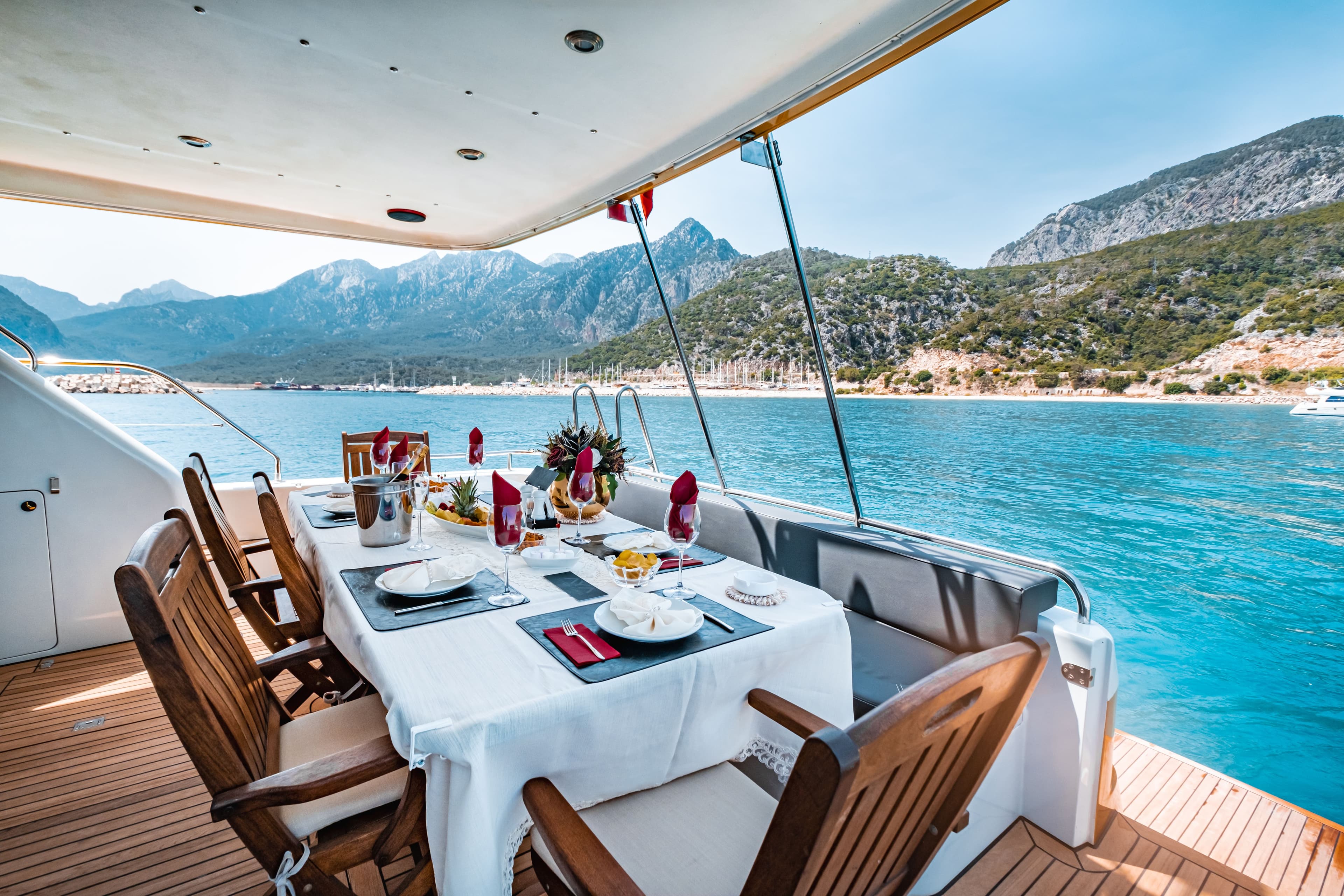
The site takes three to four hours to cover properly. There is almost no shade. Which means early morning. Which means arriving by tender from your own yacht rather than waiting in line for the first public ferry from Mykonos. The crew anchors at Rhenia, the uninhabited island next door. While you are on Delos they prepare lunch on board or set it up on the beach. For guests with any interest in history, this is often the highlight of the week.
What a Good Day Looks Like
You wake up to no wind, the water flat, the light with that sharper early quality. What pulls you out of the cabin is the smell of coffee on deck and the fact that the crew has already been to the bakery on shore.
Ready to start planning?
Tell us what you have in mind and a broker will put together a tailored selection, with honest review notes and walkthrough videos.
After breakfast and a swim off the back, you move to the next island. The crossing takes an hour or two. On the way the crew runs a trolling line off the stern, because these waters hold bonito, albacore, and amberjack. If anyone in the group has any interest in fishing at all, this is the place. Whatever you catch, the chef does something with it for lunch.
In the afternoon: a long meal on board with ingredients the chef sourced at the morning market. Or the crew drops you on shore for a wander through a village. Or you take the paddleboards into a sea cave. Or you do nothing at all, which is also a valid option.
In the evening the towns come to life. Naoussa on Paros has waterfront restaurants and a genuine, unforced charm. On Mykonos the options are obvious. On the smaller islands it might be a single taverna where the owner grills whatever came in off the boats that morning, and the house wine comes from the barrel.
This is what a properly planned week in the Cyclades actually feels like. Sea, food, culture, and that specific kind of freedom where every day is different and nothing is fixed until you decide it is.
Choosing the Right Yacht
The Cyclades are more exposed than Croatia or the Saronic, and yacht choice matters more here than in either of those places.
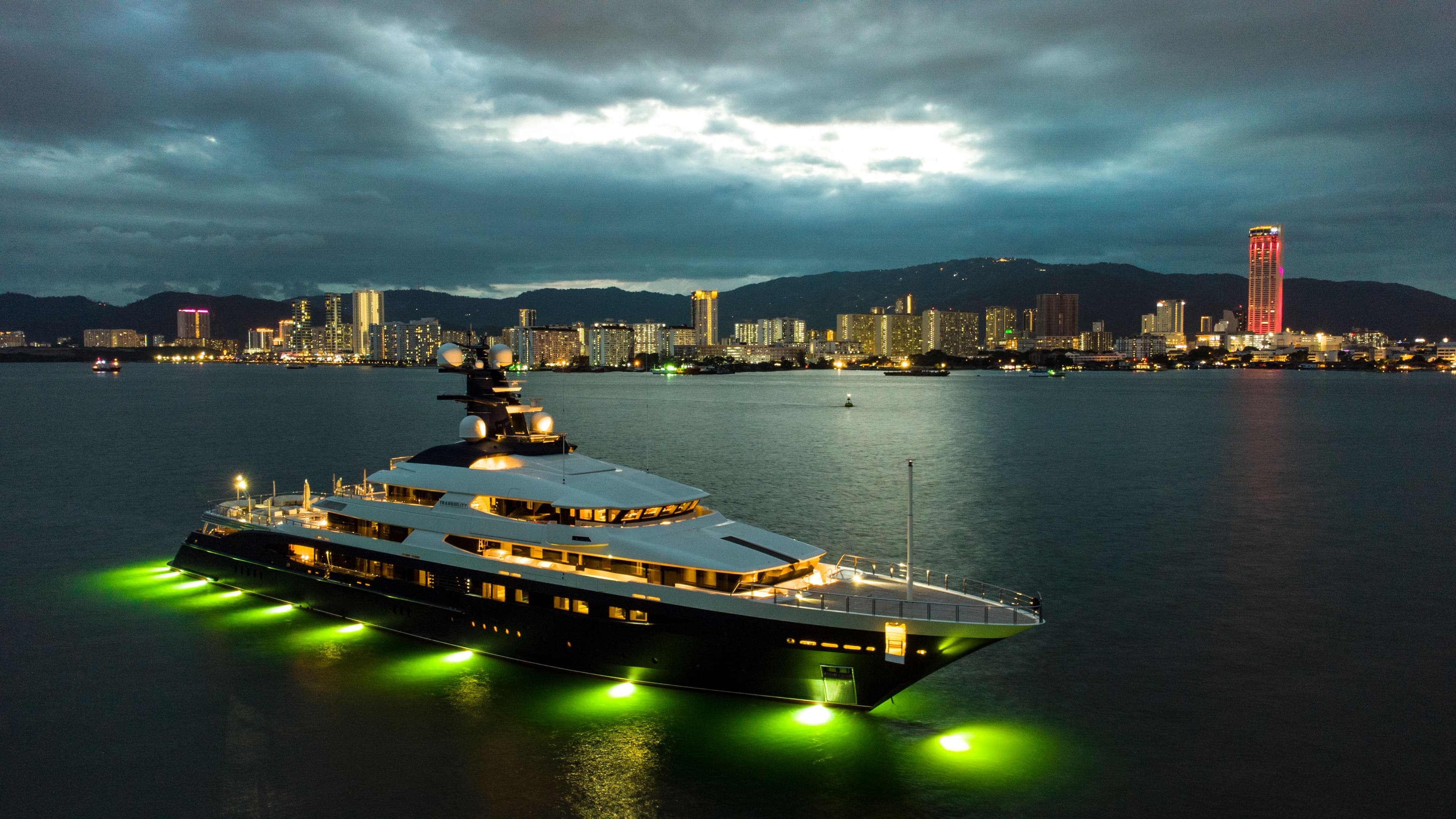
A crewed motor yacht is the most versatile option. You have the speed to cover an ambitious itinerary, and the stability to make open-water crossings comfortable when a sailing yacht would be hobby-horsing and a 40-foot catamaran would have everyone green below. A good captain uses the motor yacht's range to work around the Meltemi without losing a day. If your week includes both Mykonos and Santorini, a motor yacht is the only realistic answer.
A luxury catamaran is the right choice for families and groups who want space, outdoor living, stability at anchor, and a shallow draft that opens up smaller anchorages that monohulls cannot get into. The trade-off is less range in a week, and more caution required in a building Meltemi. The Paros-Naxos-Small Cyclades triangle works beautifully for a catamaran week: short crossings, sheltered anchorages, and you still cover proper territory.
A crewed sailing yacht is, honestly, the most beautiful way to do these waters in June or September, when the wind is a friend rather than an obstacle. In July and August, sailing the Cyclades takes a flexible group and a captain prepared to reef early.
The luxury catamaran charters guide goes deeper on the differences, and the Greece charter page shows what is currently available.
Who This Charter Is For
The Cyclades are right for groups who want variety. A different island every other day, food that shifts as you move, and a vibe on Sifnos that has nothing in common with the vibe on Mykonos. If the week you want mixes a morning at a 2,500-year-old temple site with an afternoon swimming in a pirate cave and an evening at a beach club that doesn't close until the small hours, the Cyclades is the only place in the Mediterranean that delivers all three.
It suits groups who have done Croatia or the Saronic and want more scale, more edge, more contrast. The Mediterranean destinations comparison covers how each region differs.
It suits couples, groups of friends, and families. Families with very young children who need consistently flat water and short daily passages may find the Saronic Gulf or the Ionian a gentler introduction.
If guaranteed flat water and short daily passages are the whole point, Croatia is still the most consistent choice. If the priority is fine dining at a French Riviera level, the South of France delivers something the Cyclades does not.
But if you want the islands that people still talk about years after they come back, the Cyclades is where to go.
Practical Details
Embarkation. Most Cyclades charters start from Lavrion, which is 30 minutes from Athens airport and a long way closer to the islands than Piraeus. The crossing to Kea is 12 to 15 nautical miles. Charters that stay in the central or southern Cyclades sometimes start from Mykonos instead.
Duration. Seven days is standard, and works well for either the northern circuit (Mykonos, Delos, Syros, Paros, Naxos) or the southern and western route (Sifnos, Milos, Folegandros, Santorini). Covering both takes ten to fourteen.
Booking lead time. For July and August, the best yachts book 10 to 14 months ahead. For June and September, 4 to 6 months usually gets you a good selection. The booking timeline guide has the full breakdown by season.
Budget. Crewed catamaran and motor yacht rates in Greece vary widely by yacht size, build year, crew ratio, and season. For the Greek summer season, mid-tier crewed catamarans for 8 guests start around €25,000 to €35,000 per week; well-appointed 50 to 60-foot crewed cats run roughly €40,000 to €50,000; flagship 70 to 80-foot power and sailing catamarans from Sunreef and Fountaine Pajot sit in the €60,000 to €120,000+ range. Crewed motor yachts span an even wider spectrum, from around €25,000 per week at the smaller end up to several hundred thousand for 40-metre-plus superyachts. On top of the charter fee comes APA at 25 to 35 percent of the charter fee (covering fuel, food, marinas, and operating costs), and Greek VAT, which as of 2026 is permanently set at 13% under Law 5073/2023, reducible to 6.5% or 5.2% depending on the yacht's certificate of compliance and navigation licence. Any broker quoting you a Greek charter should be able to tell you which VAT tier applies before you sign. If yours cannot, that is a flag. The charter budget guide and the APA guide walk through how it all works.
What's included. Under MYBA terms, the charter fee covers the yacht, crew, insurance, and standard amenities. Everything operational comes out of APA. The MYBA standards guide has the detail.
The planning for a Cyclades charter takes more work than for Croatia or the Saronic, and the payoff scales accordingly. That is the trade.
7TH HEAVEN
Catamaran18.59m
8 guests€24,900/wk
ABOVE & BEYOND
Catamaran24.38m
8 guests€56,000/wk
AD ASTRA
Catamaran23.99m
10 guests€65,000/wk
ADARA NEXT
Catamaran18.4m
8 guests€35,000/wk
AEGEAN SCHATZ
Gulet32m
11 guests€23,000/wk
AGATA BLU
Catamaran22.77m
10 guests€54,000/wk
AIZU
Sailing Yacht30.18m
8 guests€33,000/wk
ALADDIN SANE
Sailing Yacht25.91m
8 guests€70,000/wk
ALENA
Catamaran20.42m
8 guests€34,000/wk
ALEXANDRA II
Catamaran20.42m
8 guests€33,500/wk
Start the Conversation
If you are thinking about a Cyclades charter, the most useful thing you can do right now is tell us about your group. The right itinerary depends on who is coming, when you want to go, what kind of yacht suits you, and what you want the week to feel like. That is a conversation worth having before you start looking at listings.
Contact us. No obligation, no pressure. Or browse available yachts to see what is out there.
Maurits is a former yacht captain and founder of Frontier Yachting, a charter brokerage based in Belgium. He has sailed extensively in the Cyclades and across the Mediterranean.
Contact: hello@frontieryachting.com | +32 487 22 08 22