December 22, 2025•5 min read•By Maurits Dierick, Charter Broker & Former Yacht Captain
How a Luxury Yacht Charter Really Works: A Step-by-Step Guide from Inquiry to APA Settlement
A clear, professional breakdown of the luxury yacht charter process, from first inquiry to disembarkation and APA settlement.
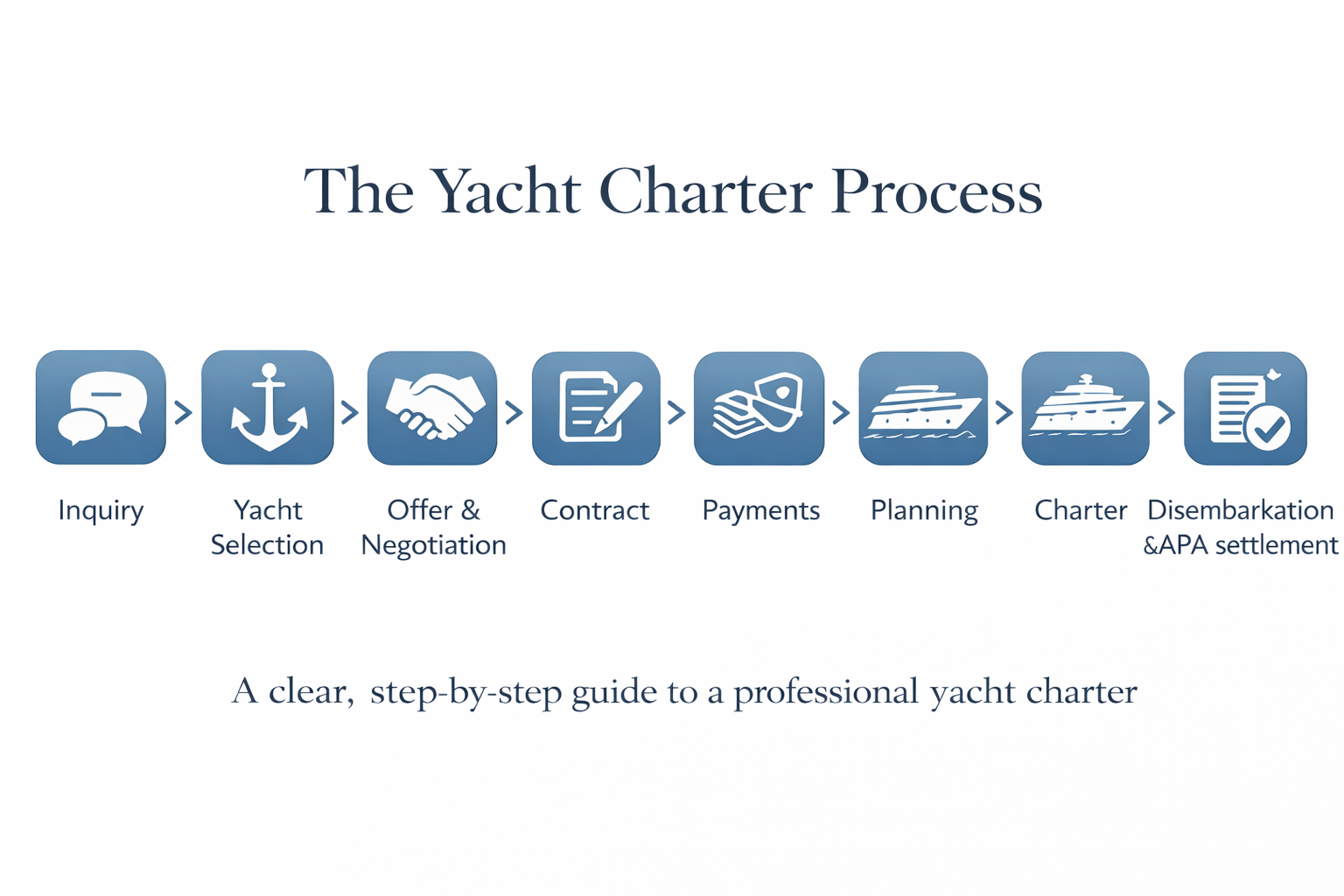
How a Yacht Charter Really Works: From First Call to Final Disembarkation
A luxury yacht charter often looks effortless. Guests step onboard, luggage disappears, the first drink is poured, and within minutes the outside world fades away. The itinerary adapts to weather and mood, meals appear without discussion, and destinations unfold naturally.
That sense of ease is the result of a highly structured process.
Behind every professional yacht charter sits a clearly defined sequence of steps designed to remove uncertainty, manage risk, and align expectations long before the yacht leaves the dock. Understanding this process doesn’t complicate the experience. It explains why it works.
This guide walks through how a yacht charter actually functions in practice, from the first conversation to the final accounting.
This structure is consistent across professionally run charters worldwide, regardless of yacht size or destination.
Step 1: The First Call – Defining the Charter Framework
Everything begins with a conversation, not a yacht.
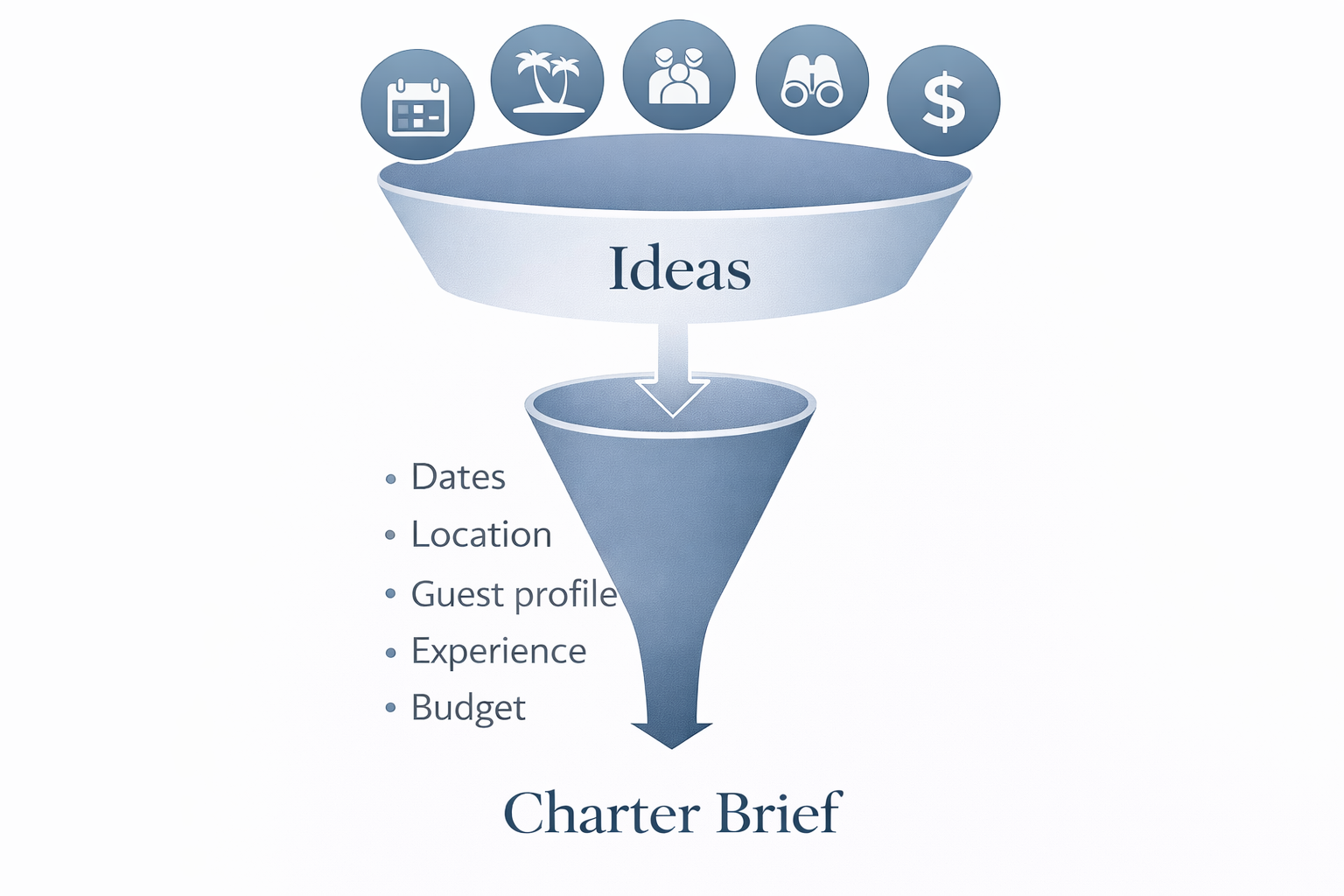
The purpose of the first call is to define the framework of the charter:
preferred dates and duration
cruising area
group size and composition
previous charter experience
budget range
This information allows a broker to work intelligently. Budget discussions at this stage are not about pressure or limitation. They are about relevance. Without a realistic framework, even technically available yachts may be unsuitable in practice.
Outcome of Step 1: a clear charter brief which the broker can use to create a first selection.
Step 2: Yacht Selection and Shortlisting
Clients are rarely shown every available yacht, and that is intentional.
Browse the fleet
Crewed yachts for every kind of week on the water, from catamarans and sailing yachts to full-size superyachts.
Availability does not equal suitability. Factors considered at this stage include:
yacht positioning and delivery logistics
crew availability and experience
operational limitations
compatibility with the group’s expectations
This is where the brokers expertise comes in. Years of boat shows, contact with crew, owners and other brokers means they know which yachts to offer confidently, and which ones to steer away from.
Behind the scenes, brokers coordinate with Central Agents, who represent the yacht commercially and confirm availability, specifications, and terms on behalf of the owner.
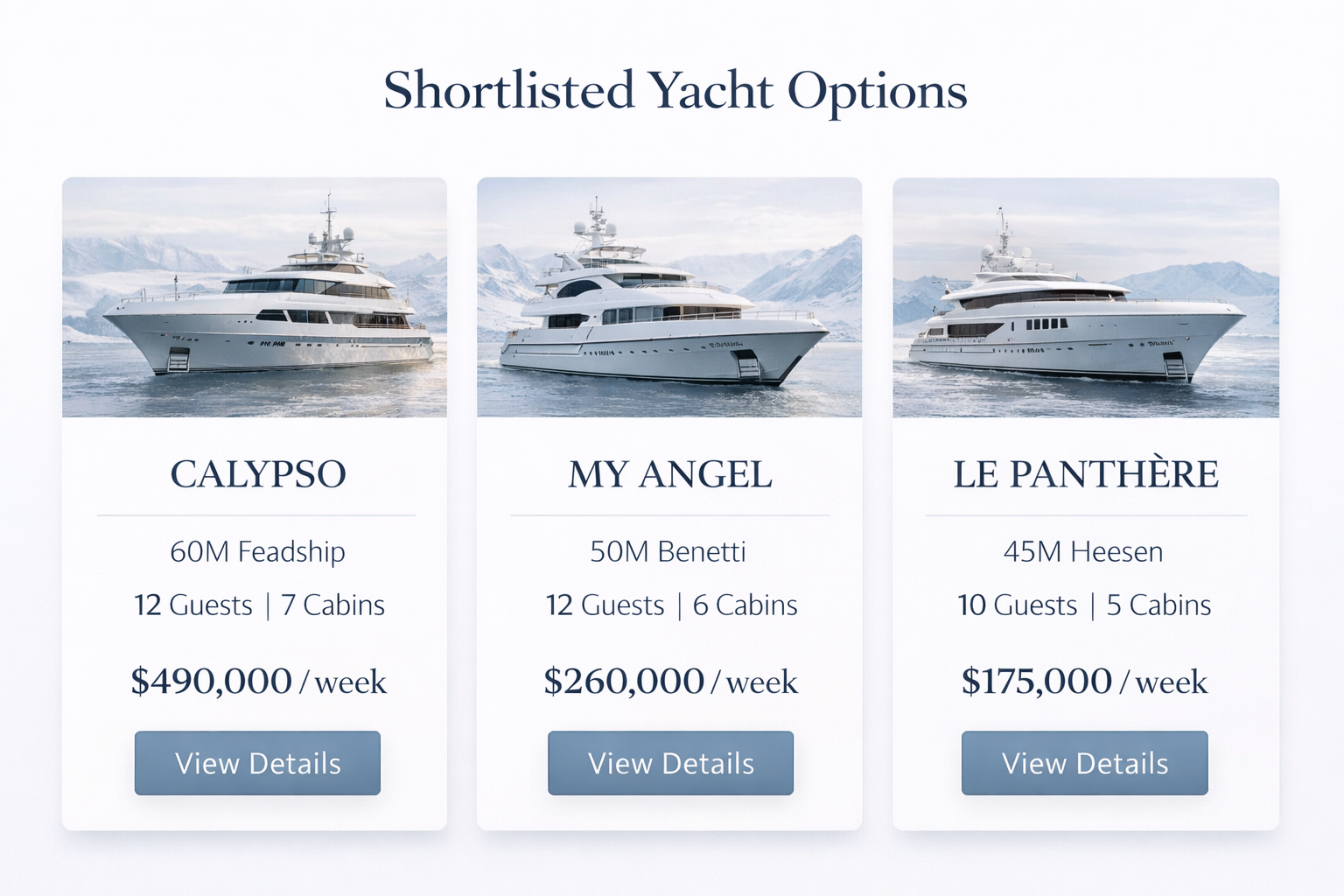
The result is a focused shortlist rather than an overwhelming catalogue.
Outcome of Step 2: 3–5 genuinely suitable yachts.
Step 3: Offers, Negotiation, and Commercial Terms
Once a yacht is selected, the charter moves into a formal offer stage.
This includes:
charter fee
cruising area
delivery and redelivery locations
inclusions and exclusions
any special conditions
Negotiation, where applicable, is handled carefully. Sometimes this involves pricing. Often it involves flexibility on logistics or timing. Not every charter benefits from aggressive negotiation, and experienced brokers understand where adjustments make sense and where they don’t.
At this stage, standard due-diligence (KYC) checks are also carried out, ensuring that all parties involved meet the required compliance and identification standards before moving forward.
Outcome of Step 3: agreed commercial terms, ports and special conditions.
Step 4: The Charter Contract
At this point, the relationship becomes contractual.
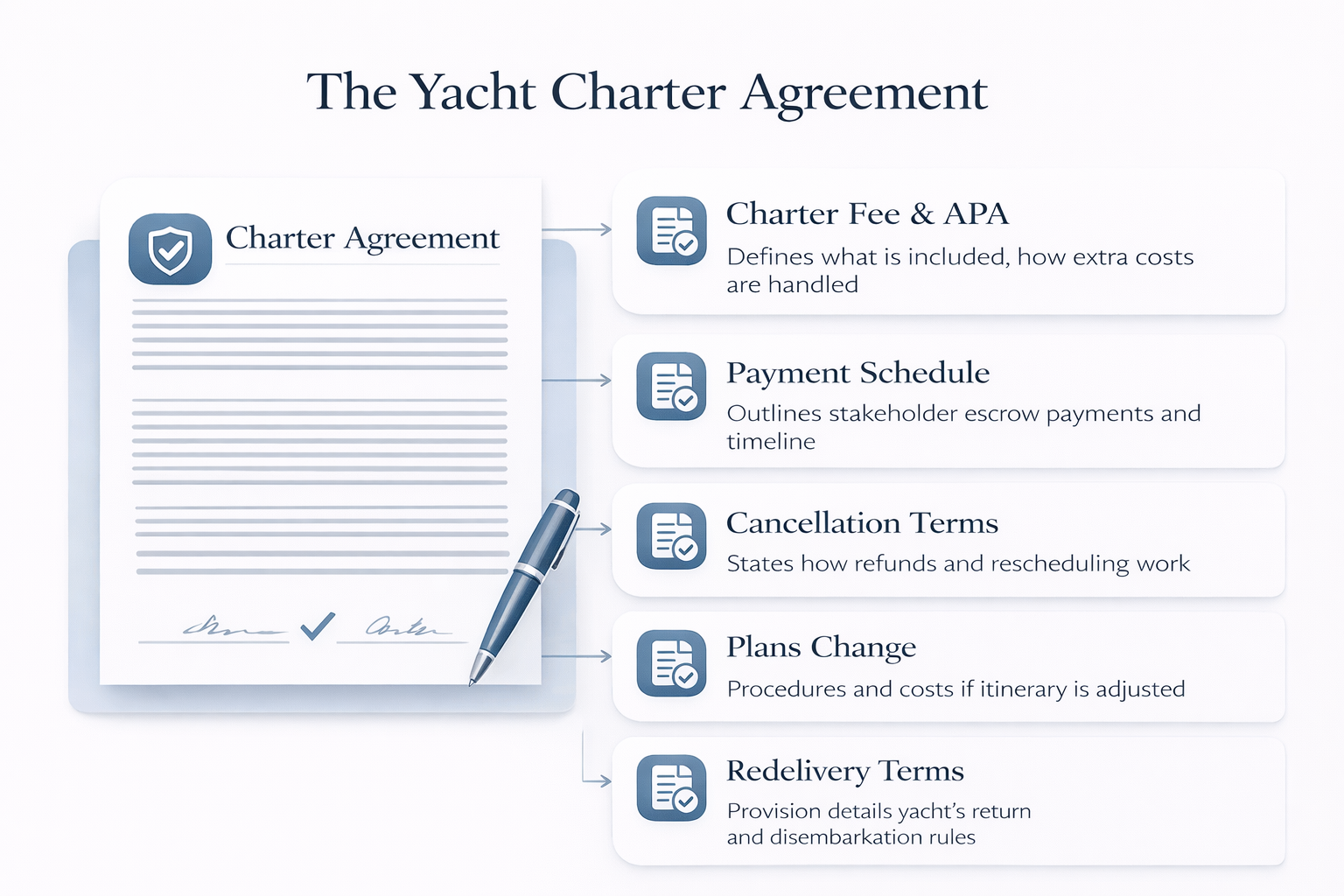
Standard agreements such as MYBA or CYBA are used to ensure consistency across international charters. These contracts define:
what the charter fee includes
how additional costs are handled (APA)
payment schedules
cancellation and delivery provisions
procedures if plans change
The purpose of the contract is not complexity. It is clarity. A well-understood contract prevents disputes by resolving questions before they arise.
Outcome of Step 4: a signed charter agreement.
Step 5: Payments and the Stakeholder Structure
One of the most important, and least understood, aspects of yacht chartering is how payments are handled.
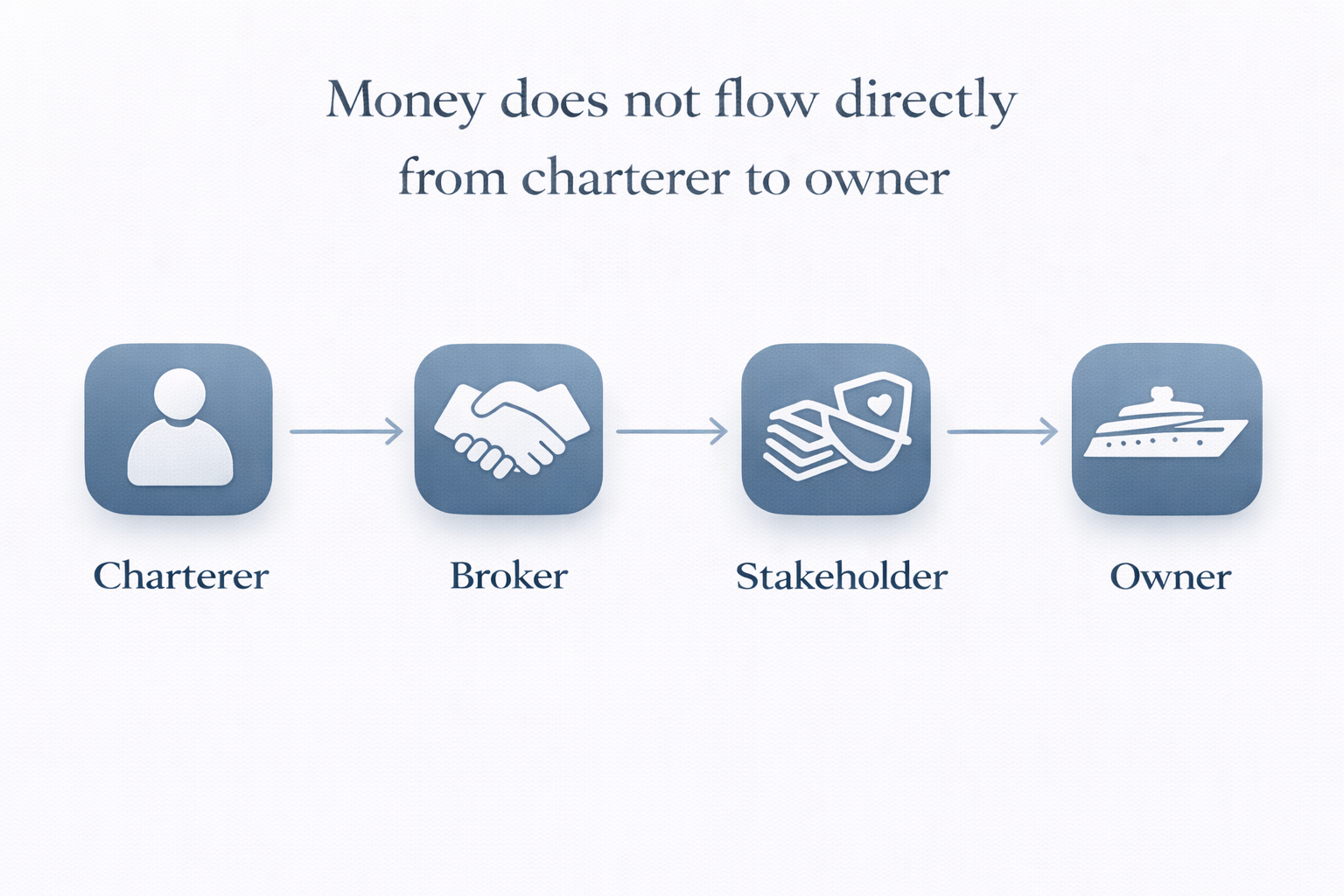
Money does not flow directly from the client to the owner.
Discover the destinations
From the Cyclades to the Caribbean, see the destinations our fleet covers, summer and winter.
Instead, funds move through a stakeholder, a neutral party who holds client funds in escrow and releases them according to the contract. This structure:
protects the charterer’s funds
ensures timely payment to the owner
prevents conflicts of interest
The broker coordinates the process but does not hold client funds. This separation of roles is a cornerstone of professional chartering.
Outcome of Step 5: secure, transparent handling of funds.
Step 6: Preference Sheets and Detailed Planning
Once the contract is in place, the charter becomes personal.
Preference sheets cover:
dietary requirements and food preferences
wines, spirits, and non-alcoholic drinks
daily rhythm and activity level
special occasions
privacy expectations
This information is used by the captain and crew to tailor the experience. At the same time, itineraries are discussed with realism in mind. Weather, distances, and local regulations all influence planning.
Flexibility is built in deliberately. The best charters adapt rather than follow a rigid plan.
Outcome of Step 6: a personalised charter plan.
Step 7: Embarkation and the Charter Itself
Embarkation is where the visible experience begins, but most decisions have already been made.
Guests are welcomed onboard, safety briefings are conducted, and the captain outlines the initial itinerary. From that point onward, the charter evolves dynamically based on conditions and guest preferences.
A professional crew balances anticipation with discretion. Structure remains in place, but it stays invisible.
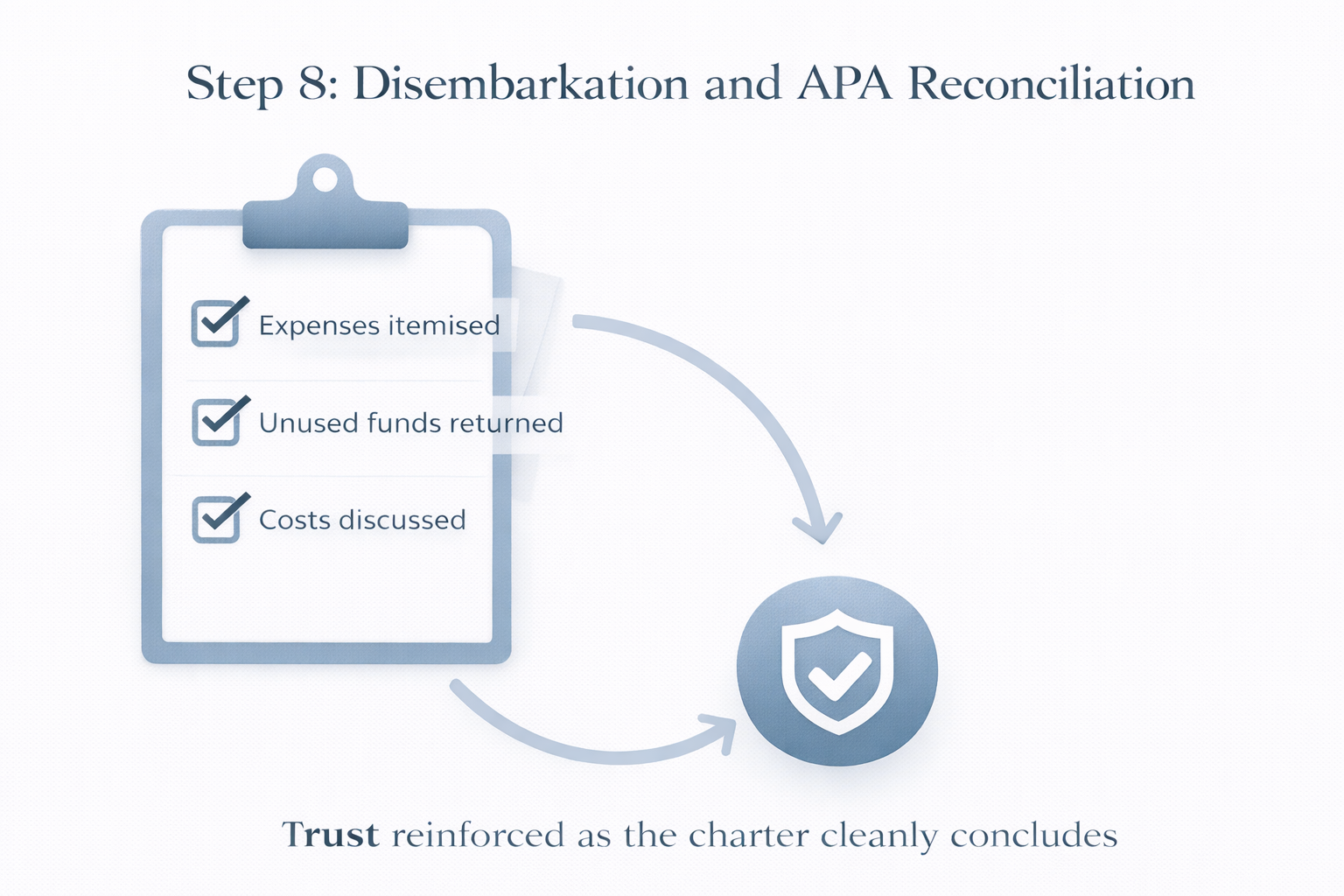
Step 8: Disembarkation and APA Reconciliation
At the end of the charter, one final process closes the loop.
The Advance Provisioning Allowance (APA) is fully reconciled:
all expenses are itemised
unused funds are returned
any additional costs are discussed transparently
At this stage, crew gratuity is also addressed. Under MYBA terms, the standard is around 10-15% of the charter fee, though this remains entirely at the charterer's discretion. If there are leftover APA funds, charterers have the convenient option to allocate these directly to the crew as a tip, simplifying the process.
This final step reinforces trust and ensures the charter concludes as cleanly as it began.
Why This Structure Matters
A well-organised yacht charter feels effortless because it is built on a clear structure.
Understanding the process does not remove the magic. It allows guests to enjoy it more fully, knowing that logistics, finances, and contingencies are handled professionally.
This is not theory. It is how serious charters are executed every day.
At Frontier Yachting, this framework underpins every charter we manage, allowing clients to focus on the experience itself rather than the mechanics behind it.



-1781163968680-hmke6oai-f6463310.webp&w=3840&q=75&dpl=dpl_7S4kHxq6kNUPyuFBqACLFnkzWz33)
-1780923292729-azlgz2ie-f5489cea.webp&w=3840&q=75&dpl=dpl_7S4kHxq6kNUPyuFBqACLFnkzWz33)
