December 17, 2025•7 min read•By Maurits Dierick, Charter Broker & Former Yacht Captain
The Rise of Explorer Yacht Charters in 2026: Polar Expeditions and Deep-Sea Submersibles
Explore the rise of polar yacht expeditions in 2026, from Antarctica to the Arctic, with real ice-class ships, submersibles and wildlife encounters.
The Rise of Explorer Yacht Charters in 2026
From Polar Regions to the Deep Sea, and Why Explorer Yachts Are Redefining Luxury Travel
Luxury travel has always evolved in cycles. For a long time, the axis barely moved. Warm-water cruising, established ports, familiar itineraries. The Mediterranean in summer, the Caribbean in winter. The appeal was obvious and enduring, but for a growing group of experienced charterers, repetition began to dull the experience.
Over the past few years, a shift has taken place. Not away from luxury, but toward purposeful exploration. Charter guests who have already done the classics are now choosing places that demand more preparation, more capability, and more respect. Ice instead of beach clubs. Wildlife instead of nightlife. Silence instead of spectacle.
This is where adventure yacht charters come into focus: as a response to how expectations have changed. For 2026, the most compelling charters are not defined by geography alone, but by access. To polar regions, to remote coastlines, and increasingly, to the deep sea itself.
What follows is an overview of what is genuinely possible today, based on vessels that already operate, technology that is already certified, and regions that are accessible under strict regulatory frameworks.
What Actually Defines an Explorer Yacht Charter
Explorer yacht charters are often misunderstood as extreme or experimental. In reality, they are defined by two very concrete elements: the vessel’s capability and the region it is designed to operate in.
The yachts themselves are not conventional luxury platforms. Explorer yachts are built with range, autonomy, and redundancy in mind. They prioritise fuel efficiency, storage, and operational robustness. Many feature reinforced hulls, advanced navigation systems, and extensive tender and equipment storage. Some are ice-strengthened or designed to operate safely in cold or remote environments, though full ice classification remains rare among private yachts.
What distinguishes these vessels is not speed or styling, but their ability to function far from support infrastructure.
KING BENJI, the 47-metre explorer yacht built by Dunya Yachts, is a good example of this philosophy applied at a manageable scale. She was conceived as a long-range, self-sufficient platform capable of supporting serious exploration while maintaining a private-yacht atmosphere. Her design prioritises deck space, operational flexibility, and the ability to carry specialised equipment. This makes her particularly well suited to remote cruising, whether in high latitudes or in the tropics, far from established ports.
At the other end of the spectrum sits BOLD, the 85-metre Silver Yachts flagship. Built with a lightweight aluminium hull and diesel-electric propulsion, BOLD represents a different interpretation of exploration. She combines exceptional range and efficiency with high transit speeds, allowing her to cover vast distances quickly. Her size allows for multiple tenders, aviation capability, and a level of onboard infrastructure that supports complex itineraries. While not designed as a polar icebreaker, BOLD’s autonomy and operational reach make her relevant to expedition-style charters in challenging environments.
The second defining factor is the region. Antarctica, the Arctic, and remote subpolar areas are not destinations in the conventional sense. They are governed by environmental protocols, permit systems, and strict operational rules. Access is regulated, landings are controlled, and itineraries remain fluid by necessity.
Browse the fleet
Crewed yachts for every kind of week on the water, from catamarans and sailing yachts to full-size superyachts.
Adventure chartering is not about conquering these regions. It is about being allowed into them.
Submersibles and the Expansion of the Experience Below the Surface
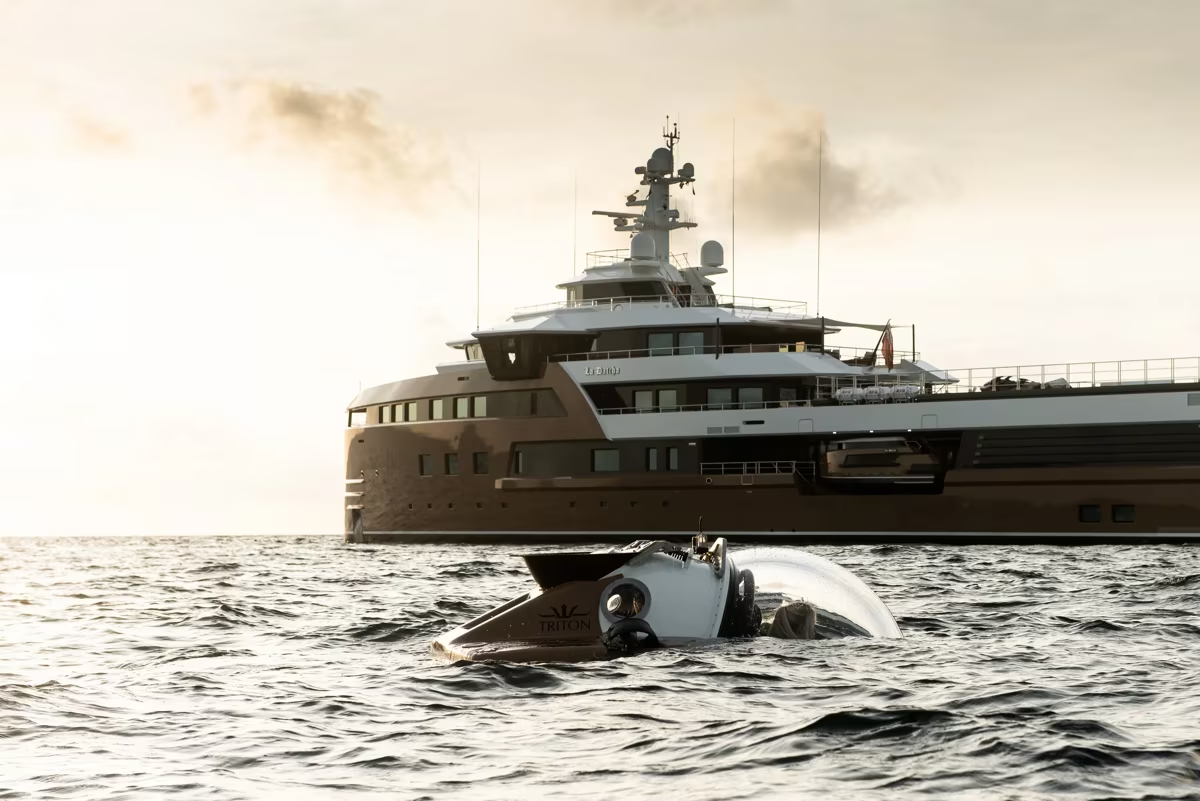
One of the most significant developments in expedition travel over the past decade has been the introduction of certified tourist submersibles. These are not experimental vehicles or marketing concepts. They are engineered, classed systems operated under strict safety protocols.
The best-known examples operate aboard purpose-built expedition vessels such as Scenic Eclipse and Scenic Eclipse II. Their onboard submersible, the Scenic Neptune, is derived from commercially certified designs and is piloted by trained professionals. While capable of reaching depths of several hundred metres, most dives take place at shallower depths to optimise visibility and conditions.
What matters is not the maximum depth, but the quality of the experience. Sitting inside a pressure-resistant acrylic sphere, guests descend into an environment that remains largely unseen. These dives are weather-dependent, carefully planned, and never guaranteed. That restraint is precisely what makes them credible.
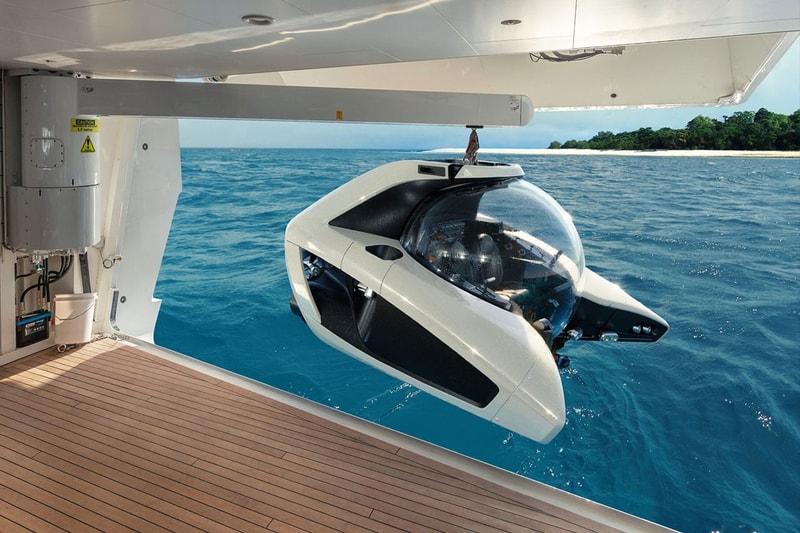
Private yachts equipped to support submersible operations remain extremely rare. Where they exist, operations are highly controlled and subject to flag-state and insurance approvals. The presence of such equipment fundamentally changes what a charter can offer, shifting the experience from observation to immersion.
U-Boat Worx NEMO personal submersible
Wildlife Encounters and Realistic Expectations
Wildlife is often the emotional anchor of polar itineraries. Penguins, whales, seals, seabirds, and in the Arctic, polar bears. These encounters are powerful precisely because they are unpredictable.
Reputable operators follow established protocols, including those aligned with IAATO in Antarctica. These rules govern approach distances, group sizes, biosecurity measures, and landing procedures. The aim is not proximity, but preservation.
On a well-run expedition, wildlife appears gradually. A pod of humpback whales feeding along an ice edge. Penguins moving across a snowfield with complete indifference to human presence. Seals resting on drifting ice. In the Arctic, polar bears may appear, but they are never promised. Their presence depends on ice conditions, season, and patience.
Explorer yachts that carry experienced expedition guides, naturalists, and polar specialists add a crucial layer of interpretation. The context they provide often becomes as meaningful as the sighting itself.
How Itineraries Actually Work
Antarctica
Most Antarctic itineraries begin in Ushuaia or Punta Arenas. The Drake Passage remains a defining part of the journey. Conditions vary, and flexibility is essential.
Once within the Antarctic Peninsula, the experience becomes highly dynamic. Zodiac landings, glacier cruising, wildlife observation, and optional activities such as kayaking are shaped by weather and ice. Schedules are provisional by design.
The Arctic
Arctic itineraries often focus on Svalbard, Greenland, Iceland, or Northern Norway. These routes combine glacier fronts, fjords, bird cliffs, and pack ice. During the summer months, continuous daylight changes the rhythm of the day entirely. Encounters can happen at any hour.
Discover the destinations
From the Cyclades to the Caribbean, see the destinations our fleet covers, summer and winter.
Explorer yachts with sufficient autonomy and ice awareness excel here, offering the ability to linger rather than rush.
Preparation, Reality, and the Role of Planning
Polar charters demand preparation. Clothing systems matter. Camera equipment must function in cold temperatures. Guests need to understand physical requirements, Zodiac transfers, and environmental limitations.
Operators often provide outer layers and boots, but base layers and personal equipment remain the responsibility of the guest. Submersible dives, where available, involve additional briefings and restrictions.
The difference between a good expedition and a compromised one is almost always planning.
Cost, Value, and Why These Charters Sit at the Top End
Adventure charters sit at the upper end of the market for a reason. They combine specialised vessels, highly trained crews, regulatory compliance, and complex logistics.
Private expedition yacht charters typically begin well above traditional charter rates and scale rapidly depending on vessel size, region, and onboard capabilities. Costs beyond the charter fee can include positioning, permits, aviation support, and specialist equipment.
The value lies not in extravagance, but in access.
Why This Segment Continues to Grow
The rise of adventure yacht charters is not about novelty. It reflects a broader shift in how experienced travellers define luxury. Fewer people are interested in doing more of the same. More are drawn to places that require intention, restraint, and respect.
Explorer yachts like KING BENJI and BOLD represent different responses to that demand. Different scales, different philosophies, but the same underlying principle: the yacht as a tool for access, not just accommodation.
Final Thoughts
Adventure yacht charters are quietly replacing charters at the highest level. For those who can afford it and have seen most other charter destinations, they’re the next step and go beyond the frontier and expanding the horizons of what’s considered possible.
Frontier Yachting approaches these charters with the seriousness they require. From vessel selection to regional compliance and expedition logistics, our role is to make complexity manageable without diminishing the experience.
If you are considering an expedition charter for 2026, the conversation should start early. The destinations are remote. The variables are many. The rewards, when done right, are extraordinary.
polar charterantarctica charterpolar yacht charteryacht charter norwayyachting antarcticasubmarine charter




-1781247496193-d1d1ivam-4ef46010.webp&w=3840&q=75&dpl=dpl_GeJow1ekgGb96ajaqPMDJS3XwHNh)
